Aha! co-founder and CEO Brian de Haaff explains why customer discovery is becoming a continuous discipline, why AI-driven output brings a new risk of software waste, and why he believes product managers are about to take on more responsibility, not less.
Aha! was recognised at The DaVinci Awards for Aha! Discovery, its tool for running customer research and linking what teams learn directly to their product roadmaps. Founded in 2013 by Brian de Haaff and Dr. Chris Waters, the self-funded, fully remote company now serves more than a million product builders across a suite of eight connected tools.
We spoke to Brian about the problem Aha! Discovery was built to solve, and where he sees product development heading over the next decade.
What problem were you setting out to solve with Aha! Discovery?
“Product development teams are responsible for deciding what software to build and ensuring it solves real customer problems. That requires a clear understanding of what customers need — yet gathering and applying that understanding remains difficult, even for experienced teams.
“Customer interviews are often conducted on an ad hoc basis, and findings get buried in notes or spread across disconnected tools. The people setting product priorities do not always have access to what customers shared or a reliable way to apply it. As a result, teams can invest significant time building features without enough evidence that they will deliver value.”
How does Aha! Discovery address that?
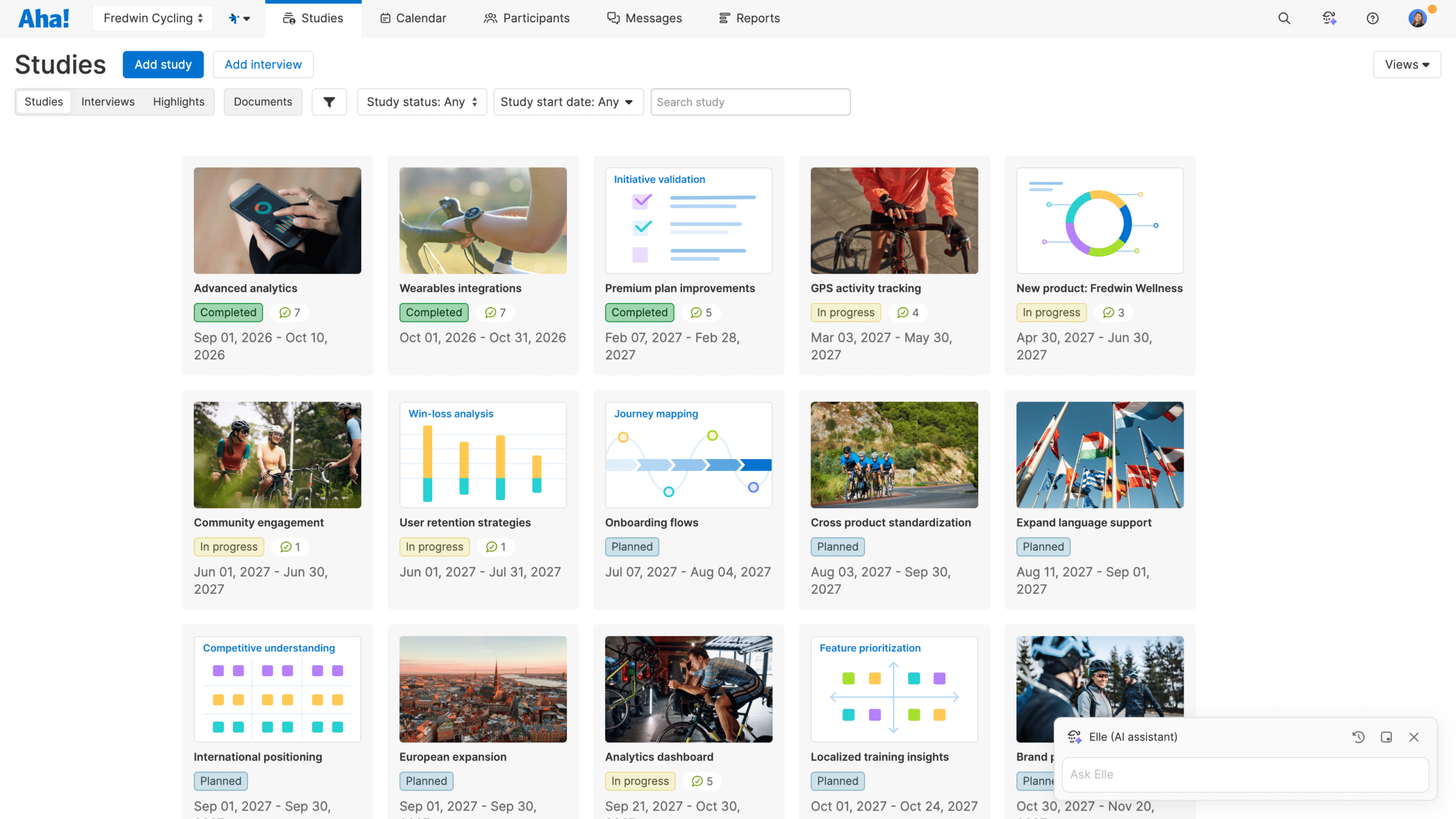
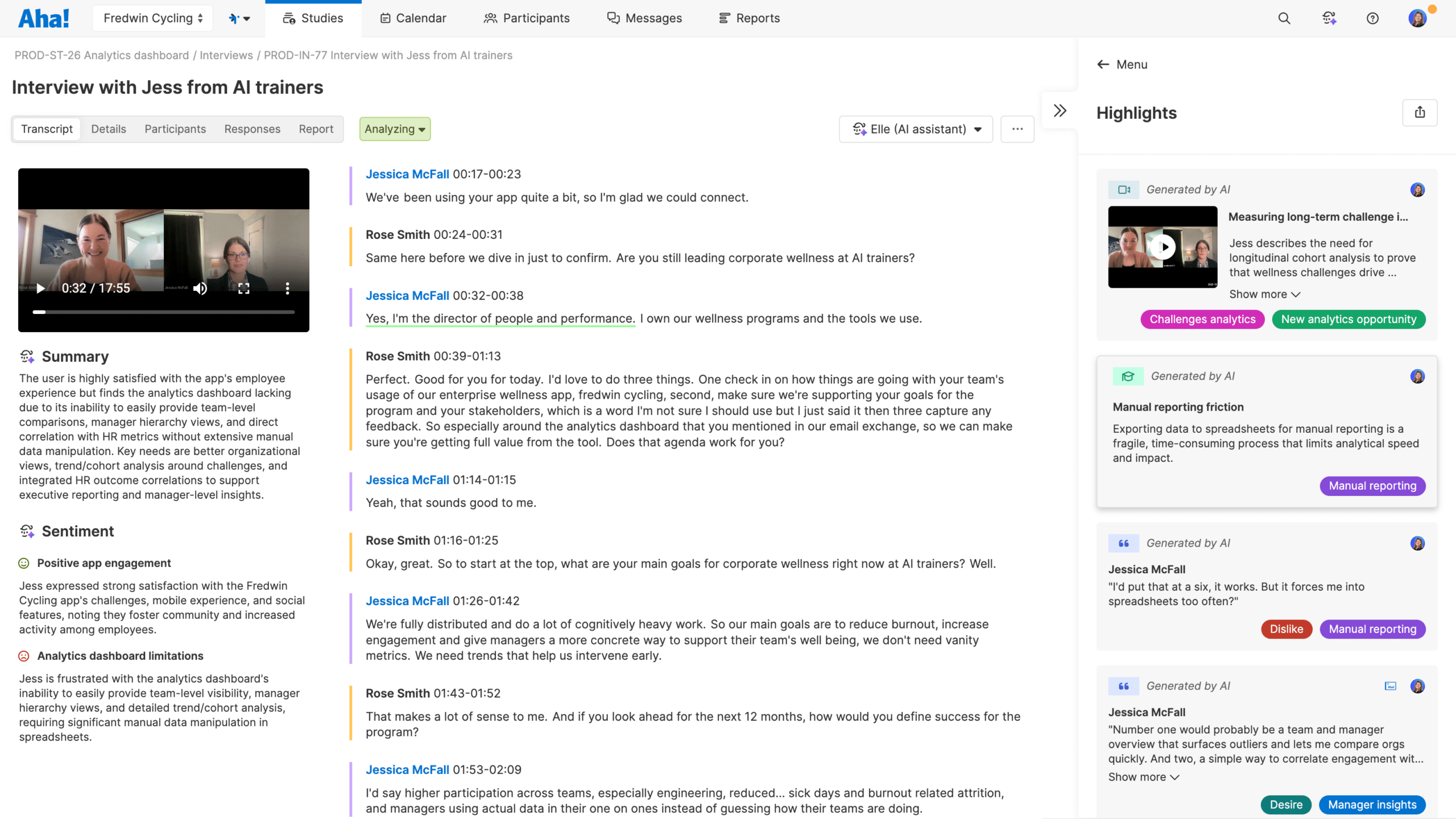
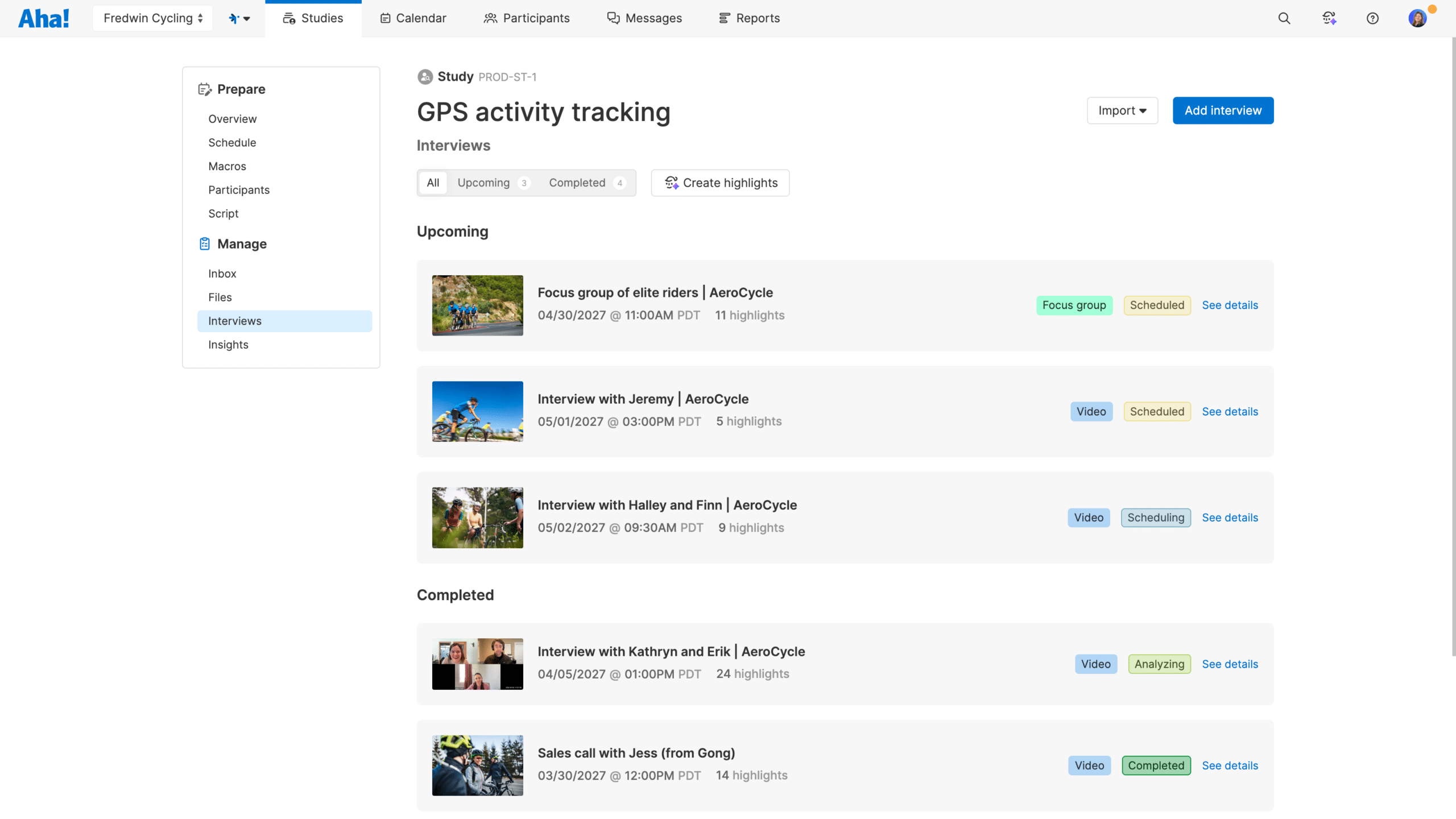
“We built Aha! Discovery after our own discovery work made it clear that we — and many other teams — needed a better way to gather customer insights and turn them into product decisions. It makes customer research a structured, connected practice within product development. Teams can recruit participants, manage interviews, use purpose-built AI to analyze conversations, and link insights directly to their product roadmaps.
“We want more product teams to build from a deep understanding of customer needs — and experience the satisfaction of making a difference for the people they serve.”
How are your customers’ expectations changing?
“Our customers are product development teams that need to decide where to invest their time and resources. Increasingly, they want customer research to be part of that work on an ongoing basis rather than something conducted occasionally and reviewed later.
“That means product managers are spending more time talking directly with customers and looking for faster ways to make sense of what they hear. They also expect AI to reduce the manual effort involved in reviewing research and finding patterns across it.”
What difference is that making in practice?
“Aha! Discovery was built specifically for this way of working. It gives product managers a dedicated place to run discovery themselves, with AI support built into the research process. Customers tell us they use interview learnings to support business cases and guide product direction. They also report that AI-assisted analysis reduces work that previously took hours to seconds.
“We expect customer discovery to become a more regular part of product management itself. Product teams will increasingly make decisions with a current understanding of customer needs rather than relying on periodic research projects.”
AI is making it far faster to produce software. Is that entirely good news?
“With AI, product teams can generate code, prototypes, designs, and requirements in a fraction of the time they once required. Soon, autonomous agents will produce far more of this work with limited human involvement. Volume will rise quickly.
“Product organizations will need much stronger discipline about what they pursue. Every idea no longer needs to compete for weeks of engineering time before anyone sees it. Teams will be able to experiment far more. That is incredibly positive in many ways, but can also create massive noise and potential waste — more features, more products, more internal tools, more customer choices, and more maintenance behind all of it.”
How is Aha! preparing for that?
“We are preparing for that future by helping product managers make stronger decisions earlier. Across Aha! software, we are using AI to give them better customer and product context, help them evaluate ideas before committing resources, and automate more of the work around those decisions.
“We see enormous potential in giving product managers more ability to create. We also believe they need a strong reason for every product decision they make.”
What will product work look like five years from now?
“Product managers already use AI to research markets, analyze customer conversations, create prototypes, draft requirements, and write software. Five years from now, those practices will no longer feel experimental.
“AI agents will handle increasingly substantial bodies of product work. Product managers will assign goals, provide context, review results, and redirect the work as needed. They will work with multiple agents across research, planning, design, and development rather than opening a separate tool and completing each activity themselves.”
Will every organization get there at the same pace?
“Adoption will vary. Large enterprises and regulated industries will take longer to redesign processes and establish appropriate controls. Many organizations will also need time to decide which responsibilities stay human and which move to AI. But product work will increasingly be organized around people directing AI rather than people completing every step themselves.”
How is Aha! building for that?
“We are building Aha! software for that model now. We started with Aha! Roadmaps to help teams set product strategy and build roadmaps. Today the suite also includes Aha! Discovery for customer research, Aha! Ideas for customer feedback, Aha! Whiteboards for visualizing product concepts, Aha! Builder for creating prototypes and business applications, Aha! Develop for agile development, Aha! Teamwork for project delivery, and Aha! Knowledge for product documentation. More than 1 million product builders use it. Our goal is to give product managers one connected environment where AI can work with the same customer, strategy, and product context they use every day.”
How will the definition of success change in product development over the next decade?
“Software teams have traditionally treated delivery speed, release frequency, and feature output as visible signs of progress. AI will make all three easier to increase, which will make them weaker measures of product success.
“Product leaders will need to pay closer attention to results after release — with a focus on product value delivered. Did customers adopt what the team built? Did it solve the problem the team set out to address? Did it improve the product or the business? Those are much stronger measures than how much software a team shipped. We have encouraged teams to work this way since the early days of Aha! when we introduced the concept of the Minimum Lovable Product (MLP) — a product customers love from the start.”
What should product leaders do differently as a result?
“Teams should be clear about what they expect a product investment to accomplish and track the results against that expectation. That gives product leaders a stronger basis for deciding what to improve, expand, or stop.”
Where do you think the product manager’s role is heading?
“We expect product managers to take on a much broader role over the next several years.
“There is plenty of speculation that AI will reduce the need for product management because research, analysis, prototyping, and software development will require less manual effort. We think the opposite is more likely. Product managers will direct more of that activity themselves and take responsibility across a wider span of product development.”
What will distinguish the strongest product managers?
“The strongest product managers will have greater authority over what gets built and greater responsibility for the outcome. They will need deep customer knowledge, strong product taste, and enough technical fluency to participate directly in software creation.
“That is a significant expansion of the role. AI will give PMs far greater reach across the development process. Companies will depend on product managers to make those decisions and take responsibility for what gets built.”
Aha! was accredited with a one-star DaVinci Award in 2026 for Aha! Discovery. Annabelle Whittall, The DaVinci Awards® COO, said: “Aha! Discovery presents a compelling vision for the future of product development in an AI-driven landscape.”
Aha! is “the world’s #1 product management software,” helping more than 1 million product builders bring their strategy to life. Their integrated tools empower teams to go from discovery to delivery with AI. The suite includes Aha! Roadmaps, Aha! Discovery, Aha! Ideas, Aha! Whiteboards, Aha! Builder, Aha! Develop, Aha! Teamwork, and Aha! Knowledge. Product teams rely on Aha! expertise, Elle (the AI assistant), and training programs via Aha! Academy to do their best work. “We are proud to be a very different type of high-growth SaaS company. The business is self-funded, profitable, and 100% remote. We are recognized as one of the best fully remote companies to work for, champion the Bootstrap Movement, and have given over $1.5M to people in need through Aha! Cares. Learn more at www.aha.io.”