Simple, elegant, cost-saving technology that’s everywhere we look
In the UK alone, the introduction of the barcode in the retail industry has resulted in savings of approximately £10.5 billion per year.
Few technologies have reshaped commerce so subtly (and pervasively) as the barcode. What started as a tool to speed up grocery checkouts has become the infrastructure of global supply chains, product traceability, and inventory management.
Pre‑Barcode Retail: The Friction Before Smooth Scanning
A satisfied customer, pre-barcode
Before barcodes, every item price had to be entered manually; inventory counts happened weekly or monthly; stockouts and over-ordering were common. Retail was a game of estimation and heavy labor.
Barcodes from Idea, to Patent, to Practice
The first barcode. Source: free-barcode.com
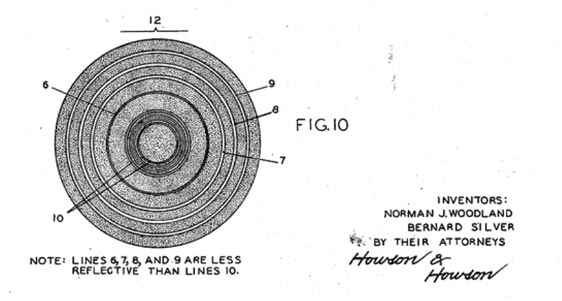
The barcode concept began in 1948-49 when Norman Joseph Woodland and Bernard Silver conceived a visual code, later patented in 1952 (U.S. Patent No. 2,612,994). Woodland’s early “bullseye” prototype was striking but impractical; later, the design evolved into vertical bars more suited to printing and scanning.
The First Barcode Scanned (and its significance)
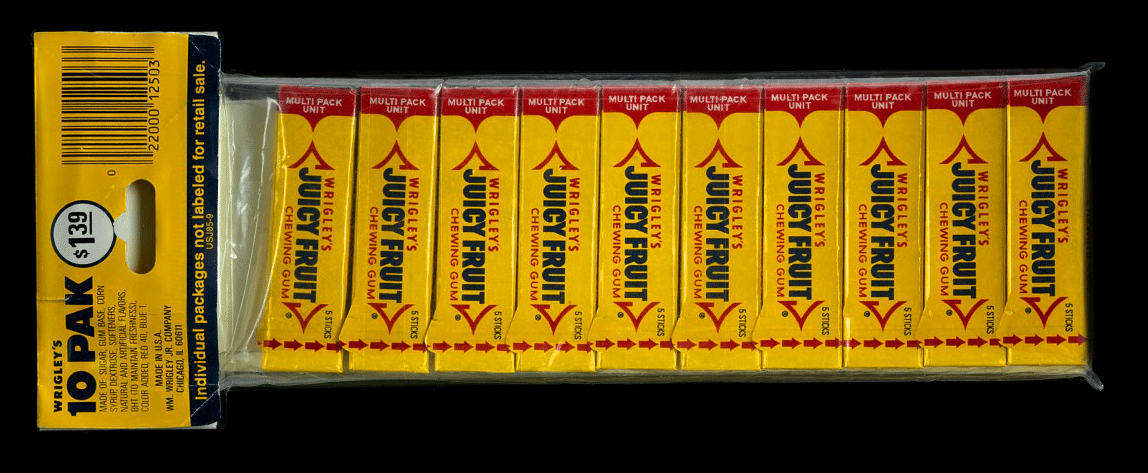
The first UPC barcode scanned was a ten-pack of Juicy Fruit gum. Source: Smithsonian
On June 26, 1974, a ten‑pack of Wrigley’s Juicy Fruit gum became the first item ever scanned with a UPC barcode at a Marsh Supermarket in Troy, Ohio. That moment marked a tipping point: the transition from conceptual innovation to mass‑scale utility.
Barcodes: The Initial Challenges (and Alternatives)
Early barcode designs had to solve for:
- Printing tolerances
- Scanner misreads due to distortion or lighting
- Cost of adoption across many manufacturers and retail chains
Alternatives were explored: “bullseye” codes, punch‑card type identifiers, magnetic stripes. Ultimately, linear barcodes (UPC/EAN) won because of simplicity, reliability, and low cost.
GS1 and the Standardisation Movement
GS1 (established 1974), along with its predecessor organizations, formalized product numbering (GTIN/UPC), scanning standards, and governance of barcode specifications. Today its standards are used in over 100 countries. Modern GS1 standards also include DataBar, DataMatrix/2D codes, and the newer GS1 Digital Link.
Invisible UX: Efficiency Over Flash
Barcodes are a UX triumph in invisibility. They don’t need flashy design; instead, they succeed by being reliable, consistent… and fast. Errors drop, speed increases, labor and mis‑pricing shrink.
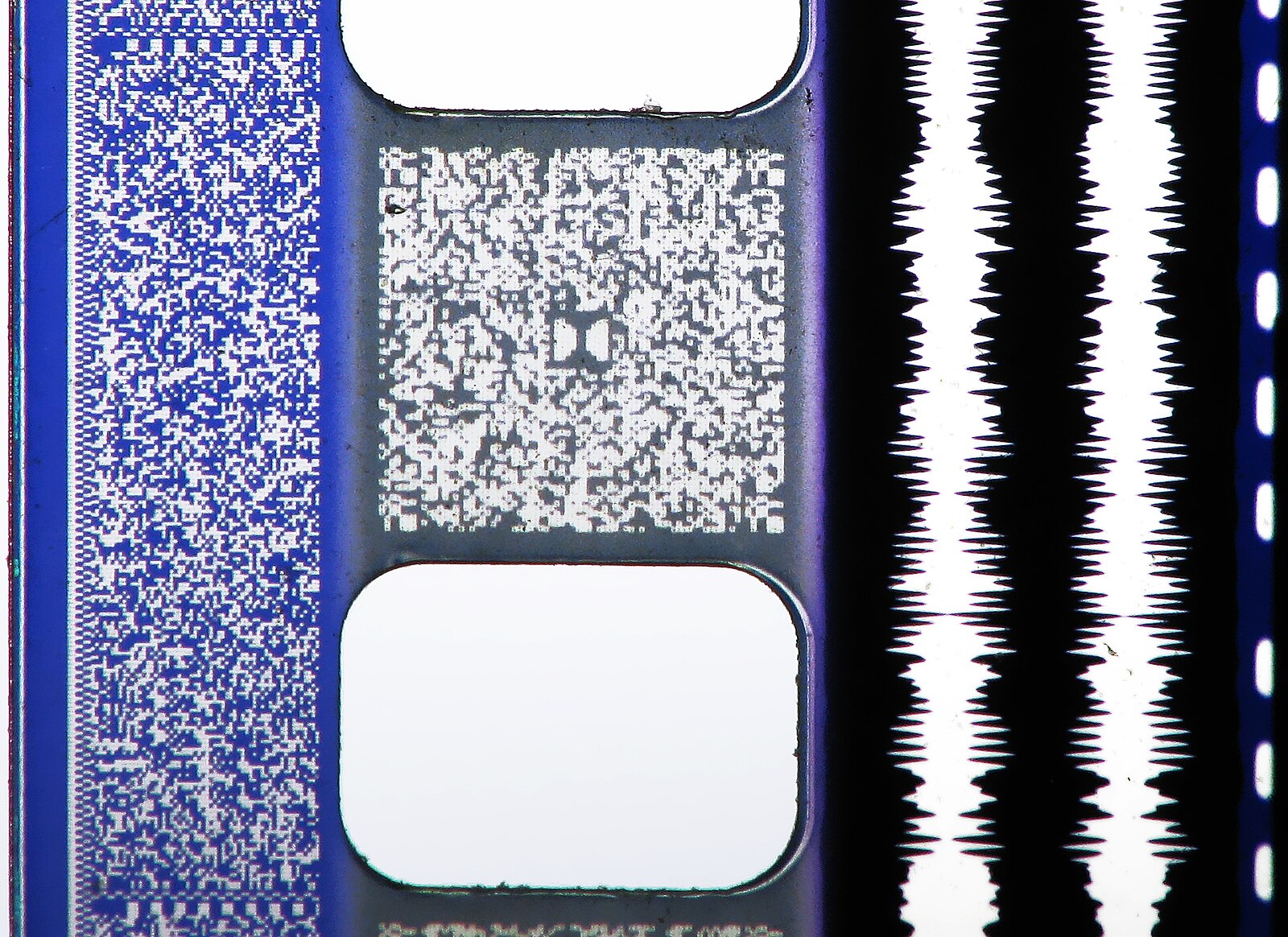
2d barcodes in film. Source: Rotareneg, CC BY-SA 3.0, via Wikimedia Commons
The Evolution Towards 2D Codes and Richer Data
Advances in barcode tech are enabling more data to be embedded, including expiry dates, serial numbers, URLs and provenance info. QR codes, GS1 DataMatrix, and GS1 Digital Link standards are central to these upgrades. Industry roadmap “Sunrise 2027” aims for major adoption by then.
Lessons for B2B Product Leaders
What the barcode’s history teaches us:
- Embed standards early; interoperability is incredibly useful
- Solve for scale and ecosystem, not just your product surface
- Invisible features that reduce friction often outperform flashy ones. Function first!
- Plan for evolution: what works now must endure future shifts
Conclusion: Recognizing Quiet Innovation
The barcode is among the unsung heroes of product design. It’s infrastructure, not art. But this infrastructure is a truly remarkable innovation. It is steady, invisible, and essential. As product leaders and business builders, we should honor systems that make everything else possible.
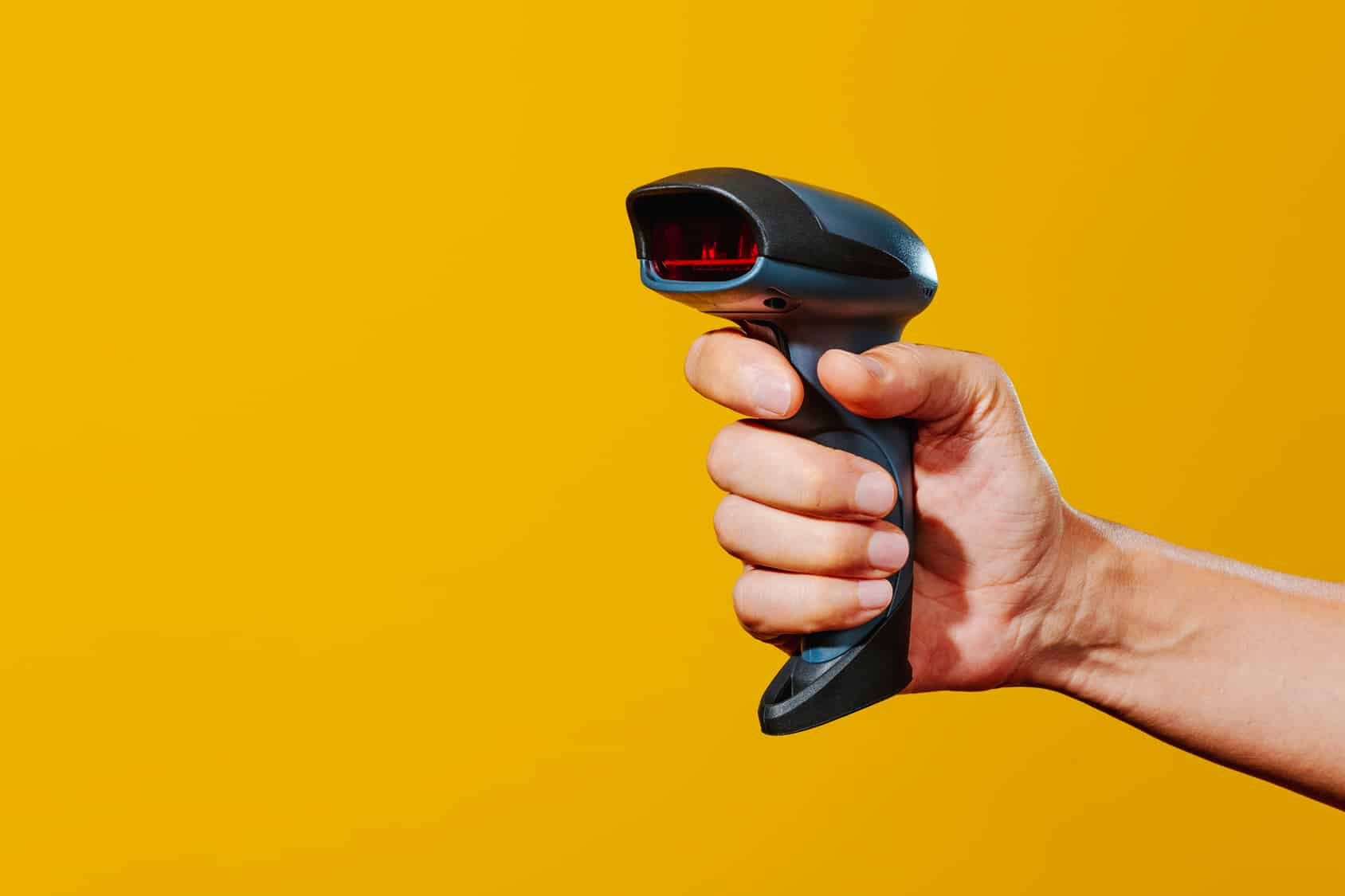
Power to the people! The humble barcode scanner.