
AxisCare is an enterprise-level, web-based home care management software designed for personal care, private duty home care, skilled care, and IDD (Intellectual and Developmental Disabilities) agencies. Founded by home care agency owners, the platform provides back-office administration, scheduling, financial tools, and point-of-care mobile applications across all 50 U.S. states and several international markets.
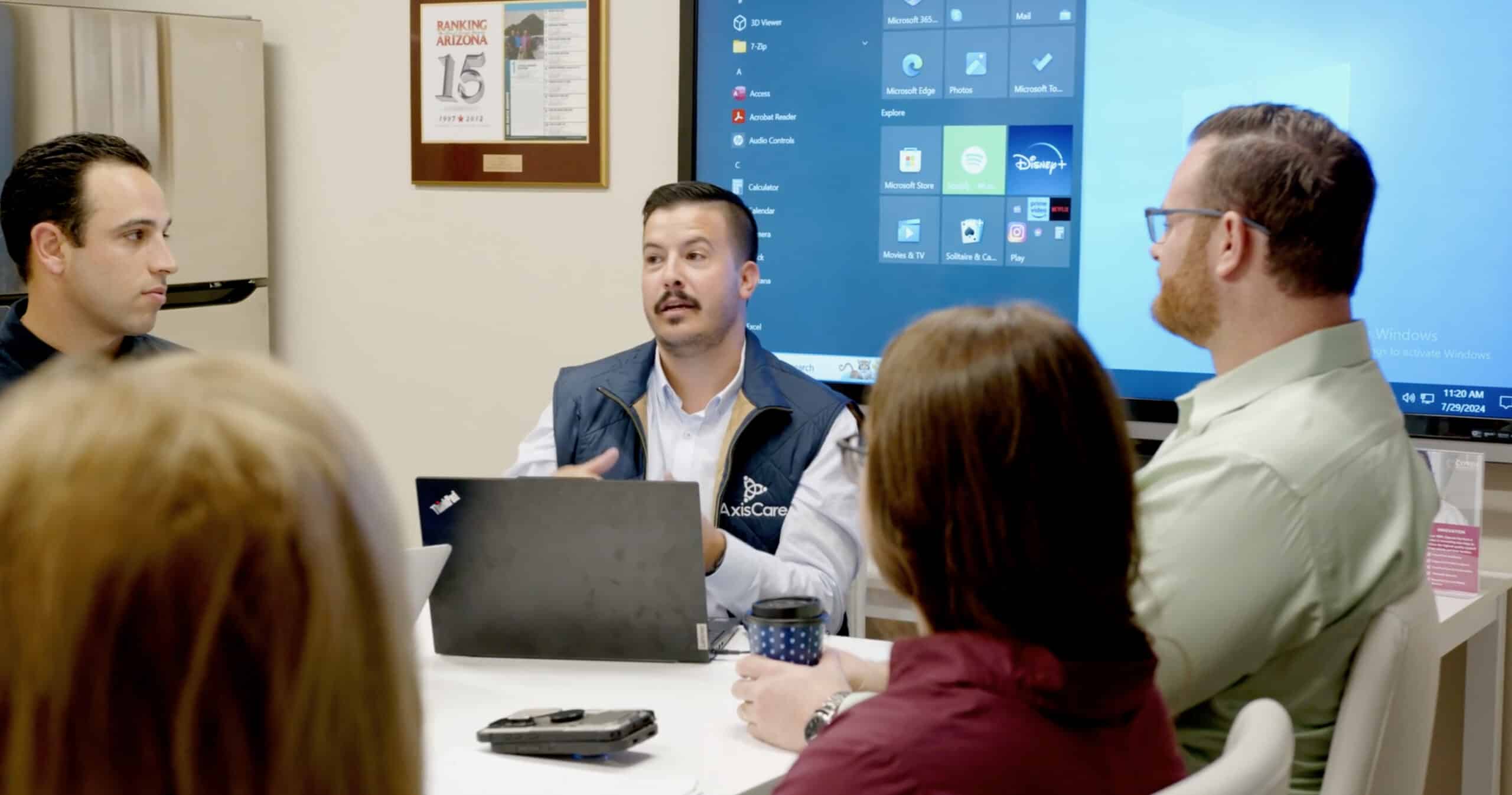
We sat down with John Atkinson, Chief Technology Officer at AxisCare (pictured above, center), where he leads technology and product strategy with, he tells us, a single north star: ‘people helping people.’
AxisCare received a Two-Star DaVinci Award® earlier in the year for its market-leading software.
First question, then: what challenge does your software solve?
“In 2010–2011, most home care software was still desktop-based, requiring staff to be physically present in the office to complete essential tasks. As agencies began to scale, this model quickly became inefficient, leading to manual processes, time-consuming updates that had to be downloaded locally, and limited accessibility. These all hindered growth and efficiency.
“At the same time, the reality of home care is that it happens outside the office. Caregivers are in the field; coordinators are constantly on the move, and real-time information is critical. Yet the technology supporting them was stuck behind a desk. Recognizing this gap, AxisCare set out to reimagine what home care software could be. By leveraging emerging web capabilities, the team built a fully web-based platform, eliminating the need for manual updates and enabling agencies to access their operations from anywhere.
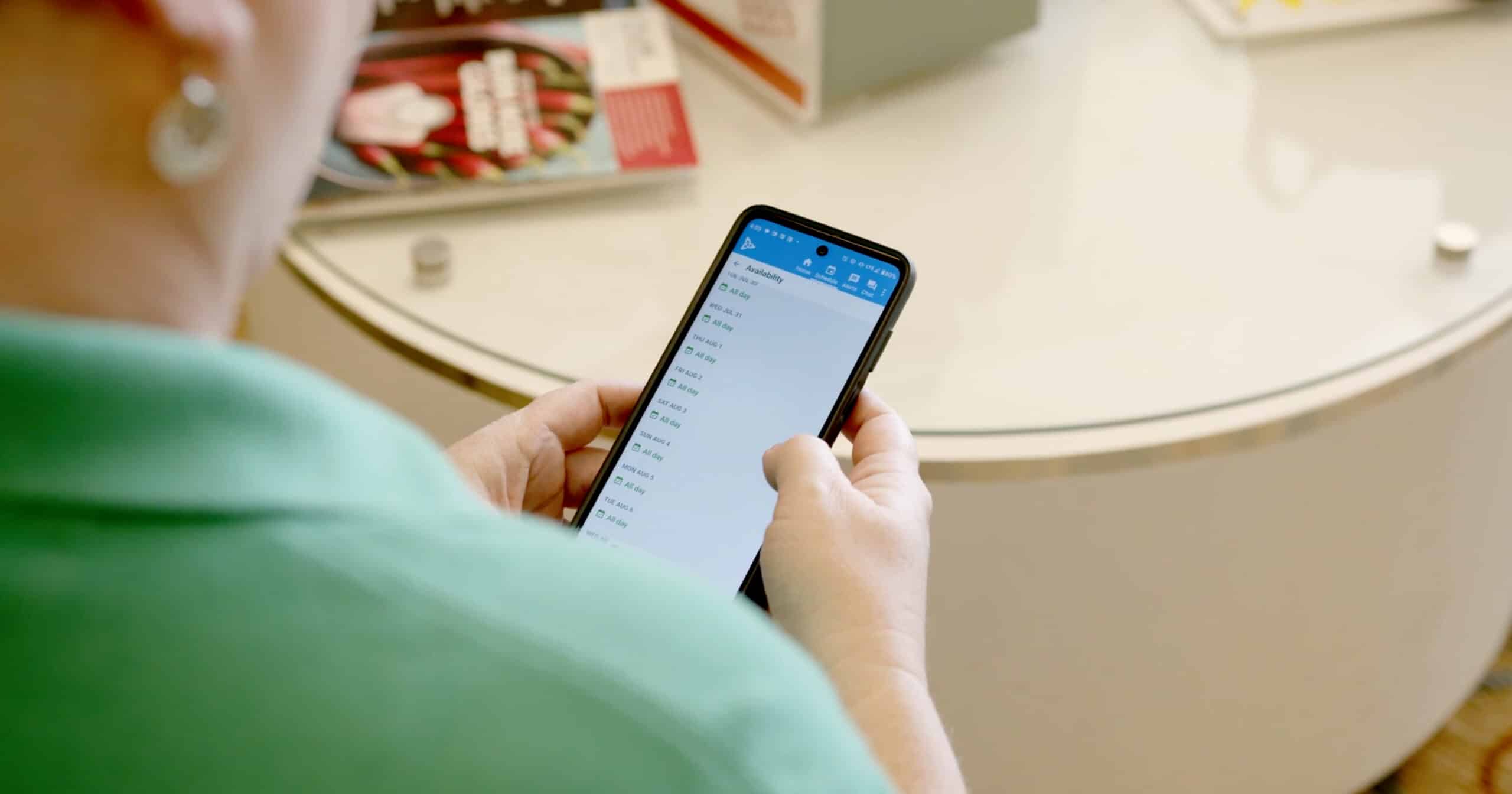
“Complementing this, AxisCare became the first in the industry to introduce a native mobile application, extending that accessibility directly to caregivers and staff in the field.”
The advantages of web-based solutions in general are well-documented. It’s good to see it used particularly well here for caregivers in the field, but what other challenges have you faced?
“Beyond operations, another major challenge was visibility into growth. Home care providers lacked effective tools to manage referrals, track referral sources, and understand the status of prospective clients.
“AxisCare addressed this by integrating referral management and marketing resources into the core platform, giving agencies a clearer view of their client journey and revenue pipeline.
“Together, these innovations were driven by a simple but powerful idea: the technology supporting home care should be as mobile, dynamic, and responsive as the care itself. That vision continues to shape AxisCare today, guiding the platform’s evolution as the needs of home care providers, caregivers, and clients continue to grow and change.”
It’s a fantastic goal, to make the solution as responsive as the care itself: but how have you continued to meet these needs as they inevitably evolve?
“One of the most significant shifts we’re seeing in customer behavior is the growing demand for intelligent automation driven by ongoing staffing constraints and operational pressure. Home care agencies today are being asked to do more with less.”
We hear that a lot…
“Yes. There are fewer administrative resources, tighter caregiver availability, and increasing expectations for quality and responsiveness. As a result, providers are no longer just looking for software to document what’s already happened; they need technology that actively helps them run their business. This shift is redefining expectations. Agencies want systems that don’t just store information, but that can interpret it, surface insights, and take action.
“There is a clear need for platforms with built-in intelligence; technology that can automate routine workflows, reduce manual intervention, and enable faster, more informed decision-making. At AxisCare, this shift is driving our focus on developing technology that evolves alongside our customers’ needs. As agencies face increasing pressure to operate efficiently, our platform is designed to be both flexible and intelligent, adapting to changing workflows, staffing realities, and operational demands.
“By embedding automation and decision-support capabilities directly into the system, we’re helping agencies streamline day-today operations, reduce administrative burden, and respond more effectively to the challenges they face. The goal is not just to support how agencies work today, but to ensure the technology can grow and adapt as those needs continue to change.”

What’s the biggest risk to progress?
“In the home care industry, it’s the growing imbalance between the rising demand for care and the availability of caregivers to deliver it. Demographic trends are accelerating this challenge. The number of seniors requiring care continues to increase, while the caregiver workforce is not expanding at the same pace.
“This gap creates a ripple effect across the industry, limiting access to care for families, driving up costs, and putting significant pressure on home care providers. For agencies, this often leads to margin compression as they compete for a limited pool of caregivers while trying to keep services affordable for clients.
“The result is a difficult balance between maintaining quality care, supporting staff, and sustaining a healthy business. Addressing this challenge will require a multifaceted approach, but technology plays a critical role in bridging the gap. By enabling agencies to operate more efficiently, automate administrative tasks, and better utilize their existing workforce, technology helps providers do more with the resources they have.
“Ultimately, while the caregiver shortage is a significant risk, it is also a catalyst for innovation, driving the industry to adopt smarter, more adaptive solutions that can support both caregivers and the growing population that depends on them.”
These challenges are clearly going to evolve, not disappear. Which begs the question: what will the situation be in, say, five years’ time?
“In five years, the “new normal” in home care will be defined by how effectively providers leverage AI and technology to do more with less. The caregiver shortage will continue to shape the industry, making efficiency and smarter decision-making not just an advantage, but a necessity.
“As a result, we’ll see accelerated adoption of AI-driven solutions that help agencies extend the impact of their existing teams while maintaining high-quality care. Capabilities like AxisCare’s Care Analytics will become essential – analyzing the care being delivered and surfacing meaningful insights directly to decision-makers.
“This allows agencies to better understand outcomes, identify trends, and make more informed, proactive decisions. At the same time, areas like scheduling will become significantly more efficient through AI-powered optimization, reducing administrative complexity, and ensuring better alignment between caregivers and client needs.”
AI is mentioned a lot here. While a powerful technology, does it stand in for that all-important human element of care?
“Ultimately, AI will not replace the human element of care, but it will fundamentally enhance how care is delivered, empowering providers with the tools and intelligence they need to operate more effectively in an increasingly demanding environment.”
Indeed. We’ve found AI technologies to be like force multipliers – precisely what caregiving needs, as demographics shift. How do you define success over the next decade?
“Over the next decade, the definition of quality and success in home care will expand beyond operational efficiency to focus more deeply on outcomes and the overall client experience. Today, success is often measured by a client’s quality of life and the length of time they can remain safely in their home. These are metrics that will continue to be central to the industry.
“However, how providers achieve and support those outcomes is poised to evolve significantly. Much of the interaction between providers and clients is currently transactional, centered around coordinating schedules, confirming visits, and managing logistics. As technology continues to advance, many of these routine coordination tasks will become increasingly automated.
“This shift will create space for more meaningful, higher-value conversations focused on the client’s needs, preferences, and overall well-being.”
So, less time spent on the essential-but-enervating paperwork, more on the actual care?
“Providers will be able to spend less time managing logistics and more time engaging in quality-of-care discussions that directly impact outcomes. Ultimately, success will be defined not just by the care delivered, but by how well agencies use technology to elevate the human aspects of care, enabling deeper relationships, more personalized support, and better long-term quality of life for the clients they serve.”
That has to be good news. Any final thoughts?
“One perspective that may sit slightly outside of mainstream thinking is the evolving role of AI-powered devices within the home care environment. As technology continues to advance, we’re likely to see more AI-driven tools and devices introduced into the home to help automate simple, routine tasks. While these innovations won’t replace human caregivers, they will begin to take on supportive functions that complement the care being delivered.
“As a result, caregivers will be able to focus even more on what matters most – the relationships they build with clients. With less time spent on routine tasks, there is a greater opportunity for meaningful engagement, emotional support, and truly personalized care. This points to a future where technology and human care are more closely integrated, not in competition with one another, but working together to elevate the overall quality of the care experience.”
AxisCare was accredited with a two-star DaVinci Award for technology in 2026, indicating a significant dedication to innovation and excellence.
We spoke with John Atkinson, who has more than a decade of experience building software products and is deeply involved in shaping the AxisCare roadmap. Under his leadership, AxisCare has built AxisCare Intelligence, a suite of AI-powered tools including Axi, an AI copilot, intelligent scheduling, and care analytics, all designed to save time, reduce complexity, and enable agencies to grow. John is a Baylor University alumnus, holding a Bachelor of Arts in Computer Science and a Master of Science in Information Systems from the Hankamer School of Business.