A case study of The Thermos flask.
The Thermos is so familiar it’s almost invisible. What’s so innovative about something we see most weeks, if not every day? Conjuring up images of winter hikes, deskbound soups, or even Duane Dibbley, the product does not seem remotely exotic; it may often be a figure of fun, even.

Duane Dibbley? Not Duane Dibbley!
This is quite remarkable, given how far-flung this incredible piece of technology is. Behind its deceptively simple, apparently pedestrian plastic shell lies a story of scientific insight, industrial ambition, and design persistence. It’s a product that teaches us about material innovation, productization of science, and the power of branding.
The Scientific Seed: Dewar and the Vacuum Flask
The core principle behind the Thermos comes from a scientific instrument: the Dewar flask. In 1892, Scottish physicist Sir James Dewar invented a double-walled glass vessel with a vacuum between walls to slow heat transfer, originally for cryogenic research.
This device allowed scientists to store liquefied gases longer without heat intrusion… which turned out to be the perfect foundation for a consumer product.
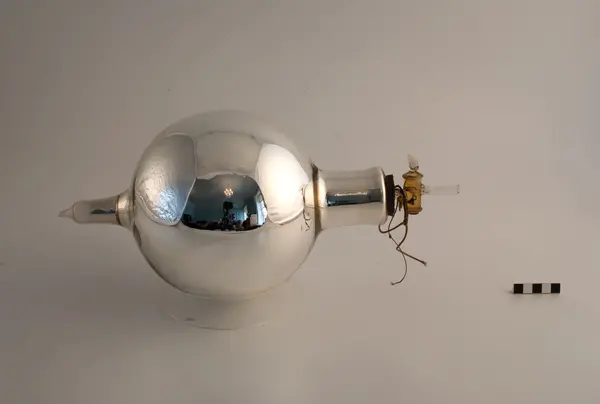
The Dewar Flask. Credit: Paul Wilkinson
From Lab to Market: Reinhold Burger and Thermos GmbH
Dewar never commercialized his flask. Instead, in the early 1900s, German glassblowers Reinhold Burger and Albert Aschenbrenner saw the opportunity to adapt the design for everyday use. They patented a vacuum-insulated bottle in 1903, and in 1904 established Thermos GmbH.
Thermos thus took a scientific prototype and re-engineered it for ruggedness, manufacturability, and usability, transforming it into a product people could carry, fill, and rely on.
Engineering the Insulation: Challenges & Solutions
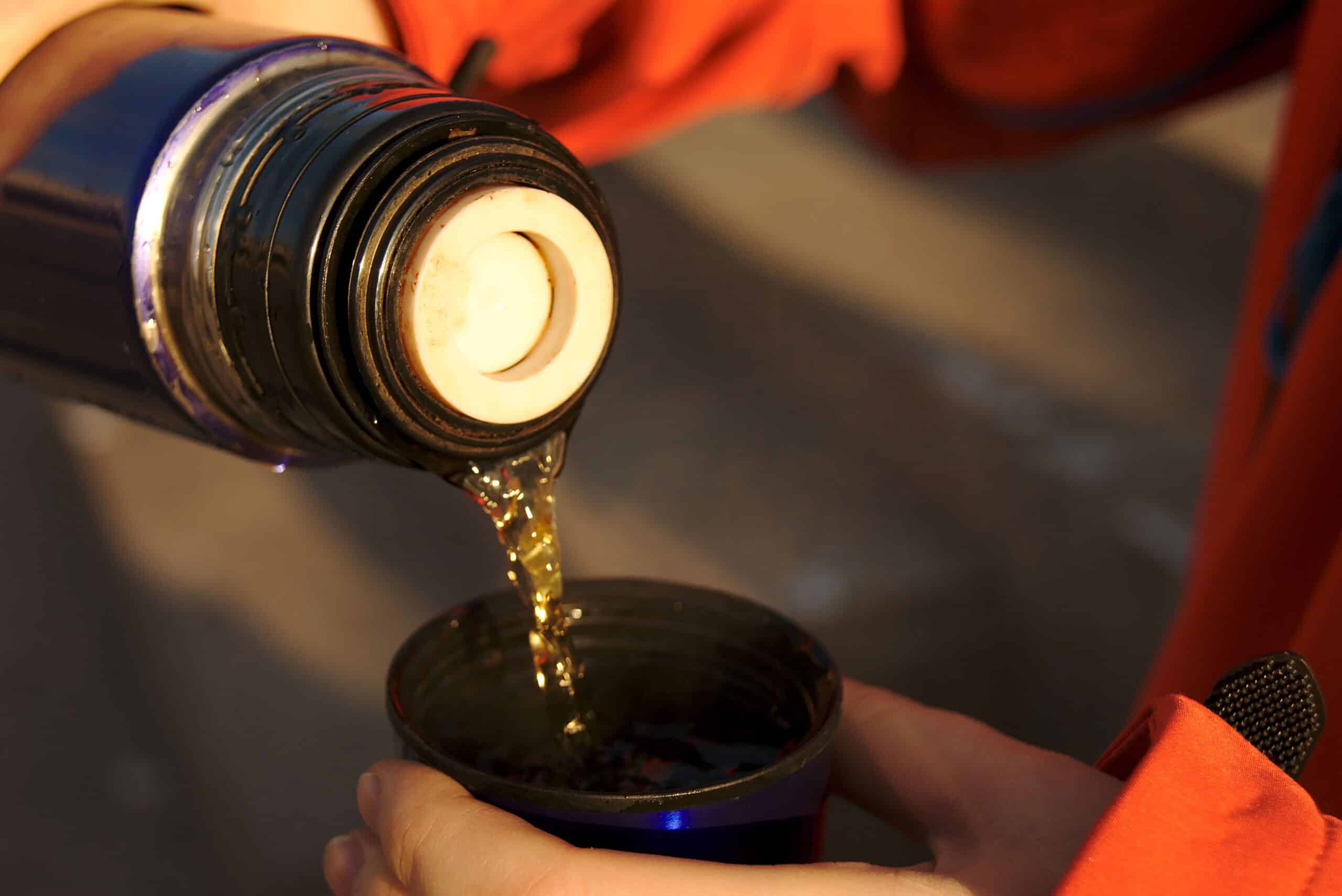
Hot drink in a Thermos flask.
The Thermos had to defeat three modes of heat transfer: conduction, convection, and radiation:
- Conduction was mitigated by the vacuum between walls (no air molecules to carry heat).
- Convection was similarly suppressed by the vacuum.
- Radiation was reduced by coating the inner surfaces with reflective metal (e.g. silvering).
But real-world challenges abounded: breakable glass, imperfect vacuums, sealing durability, thermal stress, and cost constraints. Engineers had to iterate on glass quality, insulation stability, and mass production methods.
Industrial Scaling, Branding & Trademark Battles
Once Thermos launched, the challenges shifted from physics to production, distribution, and branding. Thermos pushed into markets in Germany, the U.S., the U.K., and more. In the U.S., William B. Walker imported rights and founded the American Thermos Bottle Company in 1907.
This brought long-term trademark battles as Thermos struggled to defend its brand name from becoming a generic term.
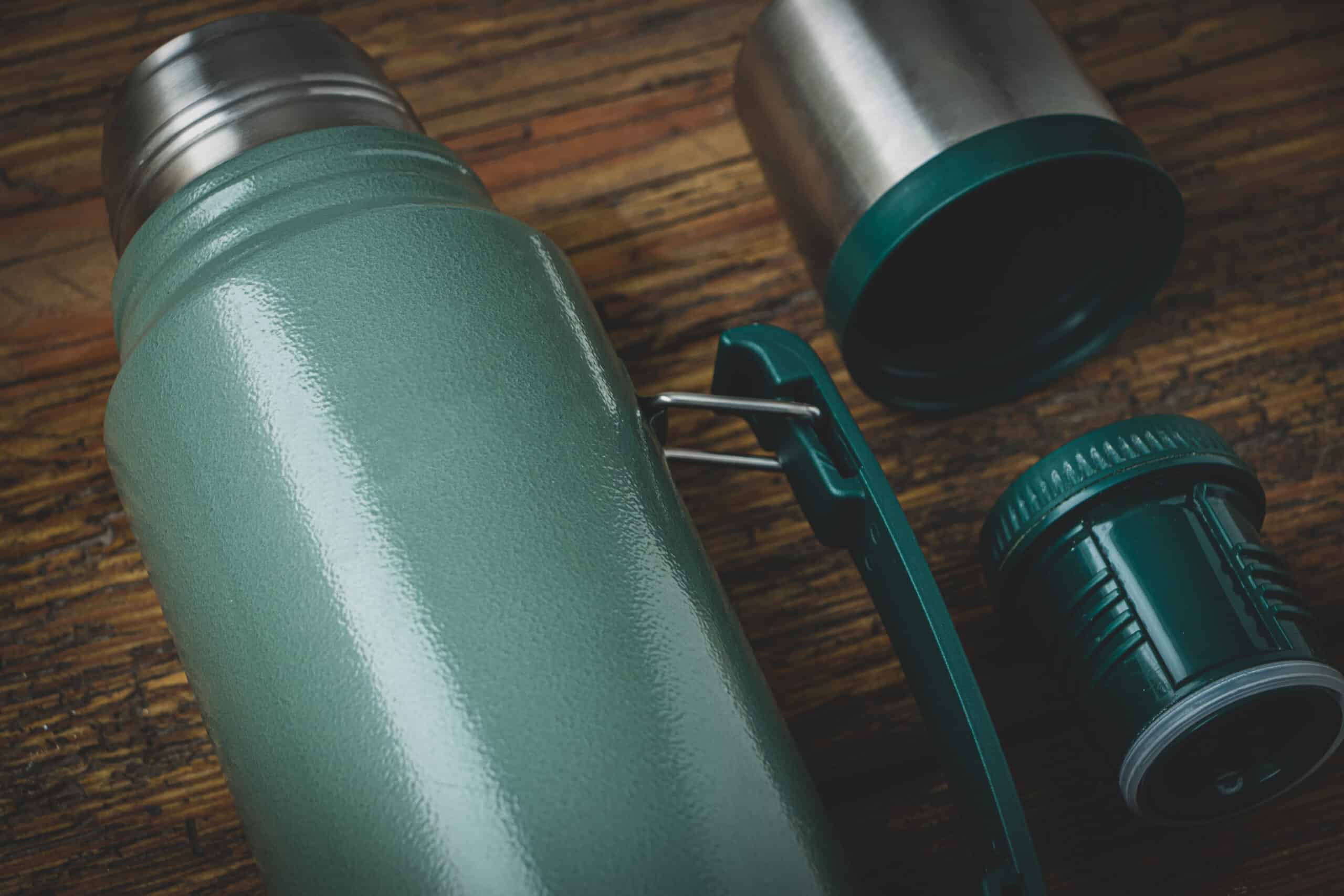
The versatile Thermos
Product Variants & Evolution
Thermos did not rest on its early success. Over years, innovation included:
- Food jars (insulated containers for soups)
- Stainless steel models (beyond glass)
- Vacuum-insulated drink bottles
- Spill-proof lids
- Double-wall steel
- Ergonomic redesigns
These iterations reflect how a foundational product can evolve across use cases while preserving its core technology.
Market Influence & Cultural Ubiquity
By the mid-20th century, vacuum-insulated containers became staples in schools, workplaces, military rations, and outdoor recreation. The Thermos became a cultural icon for portability and reliability, appearing in everything from lunchboxes to expedition kits.
The Thermos and Design for Durability

Rugged and insulative...
What makes the Thermos remarkable isn’t just its function, but that it rarely needs replacement. The product offers decades of use, even as consumer culture has moved toward disposability. In that sense, Thermos embodied circular product design principles long before they were fashionable.
Product Lessons for Today’s Innovators
The Thermos story offers valuable lessons:
- Adapt science into real-world form – Innovation often starts in labs, but lives or dies in the field.
- Guard your brand – Thermos struggled with genericide (brand name becoming generic).
- Iterate across use cases – Its tech serves drinks, food, sport, and more.
- Design for longevity – Long-term utility builds brand equity.
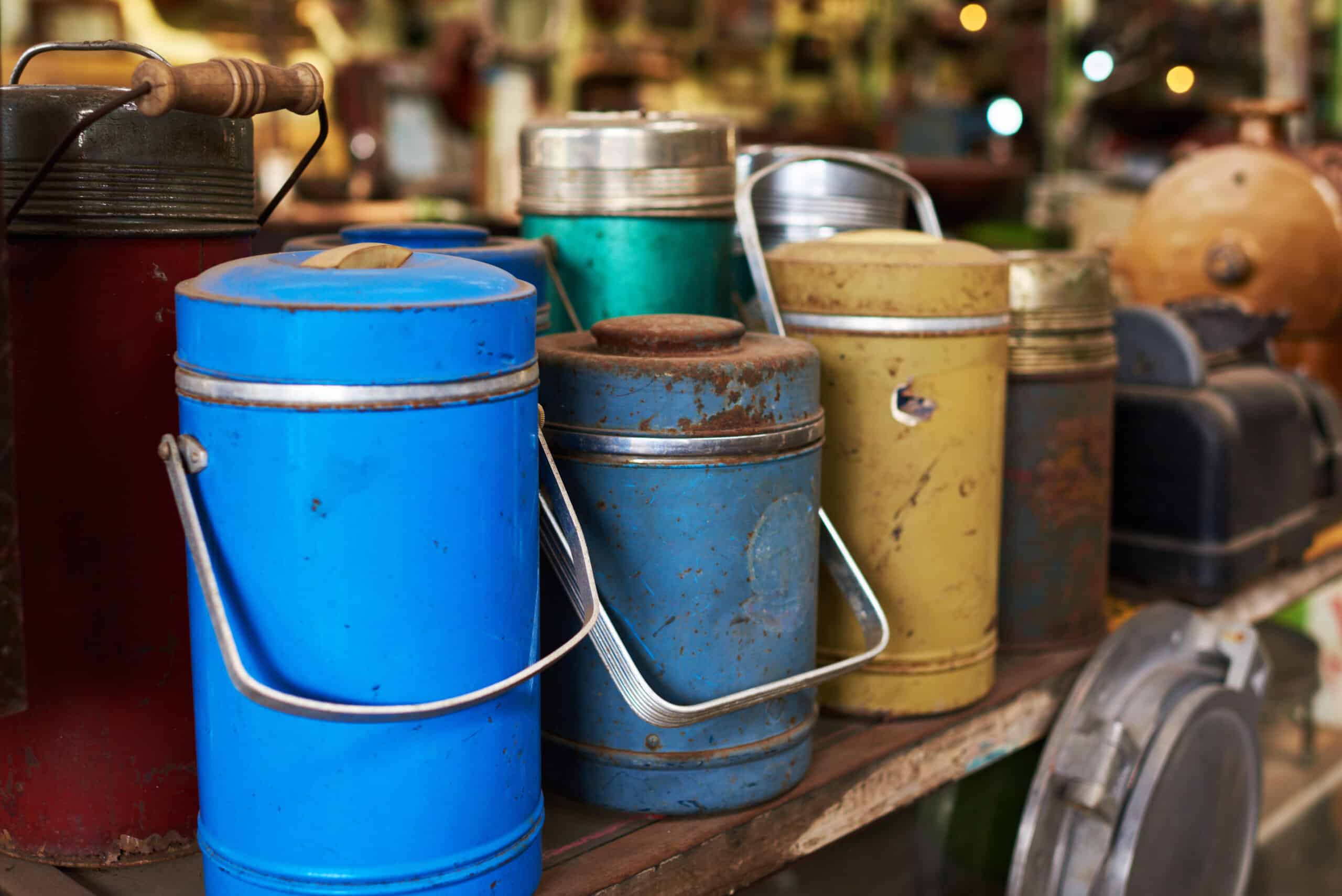
Old thermos flasks, eminently reusable
Conclusion: Celebrating Quiet Innovation
The Thermos doesn’t grab headlines. But it sits at the intersection of science, design, and function—a product that enables adventure, convenience, and comfort for millions.
At The DaVinci Awards®, we honor not only the flashy tech but also the quiet revolutions: products that just work, and keep working. The Thermos is a reminder that design longevity, not disruption, is often the most powerful form of innovation.