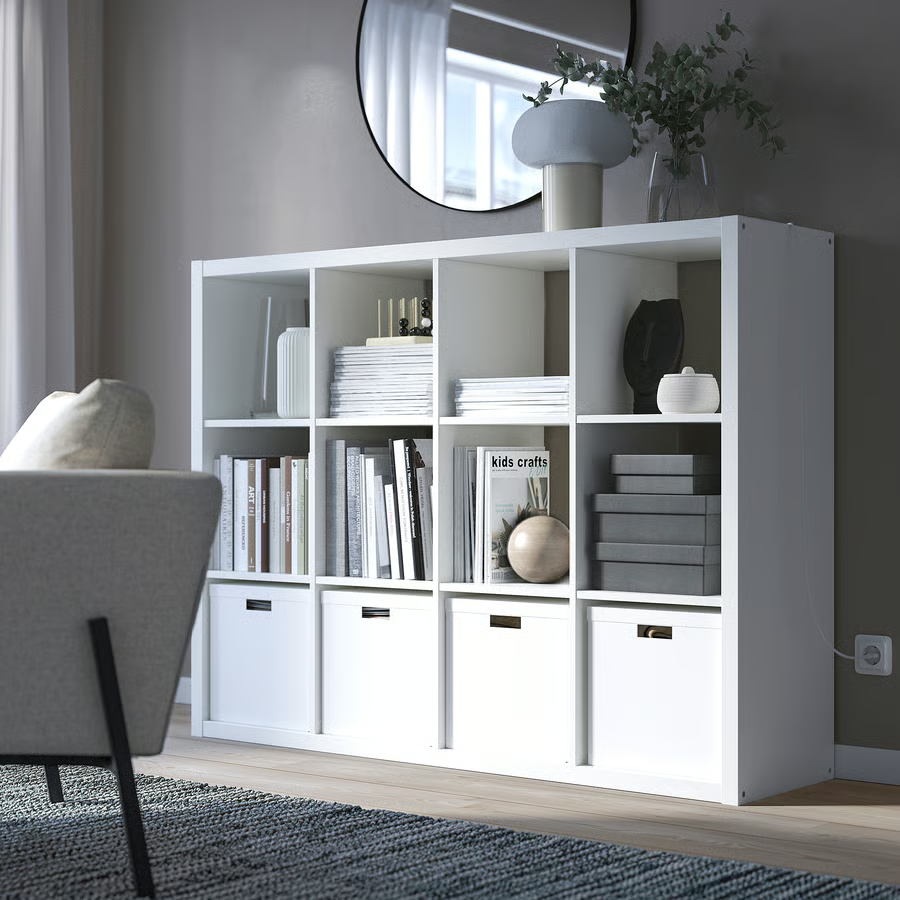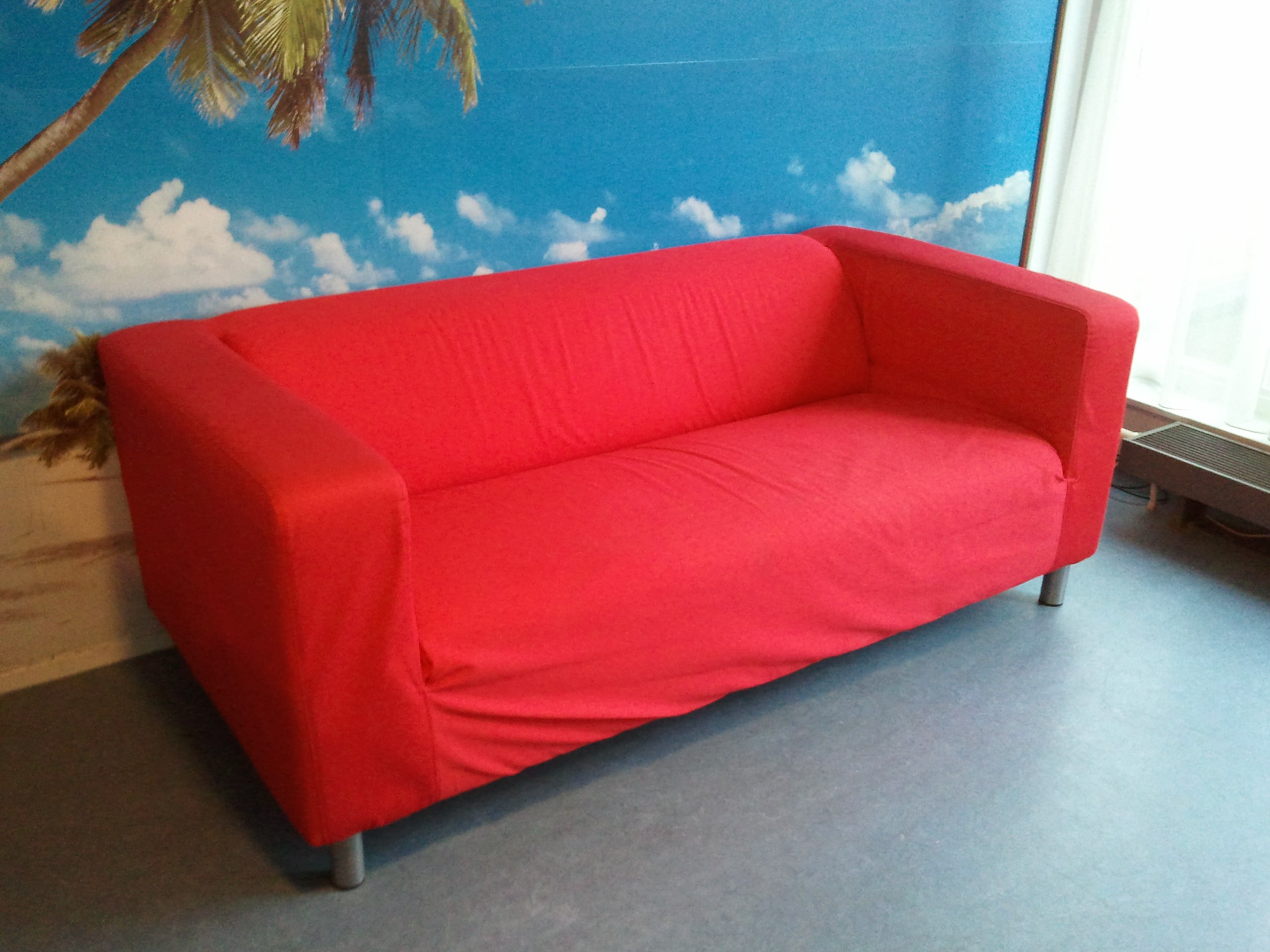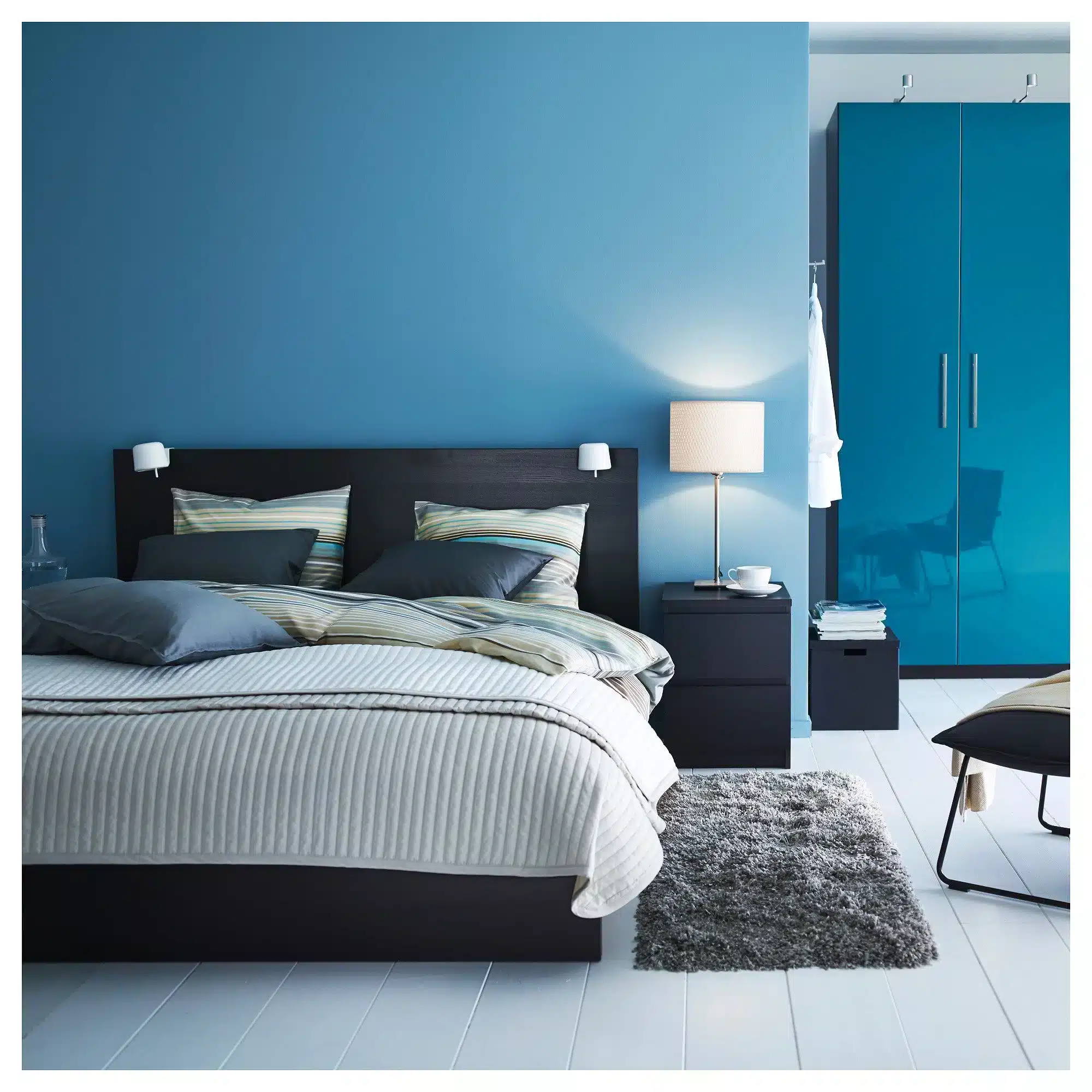
A case study in how IKEA became king of the flat-pack.
IKEA is more than a furniture retailer. What began as a mail‑order business in Sweden has become a global force by rethinking how furniture is made, shipped, sold, and lived with. Its innovations in modularity, cost control, and supply chain design make it a compelling case study in product‑led business leadership.
Bulky Logistics: The Problem IKEA Was Made To Solve
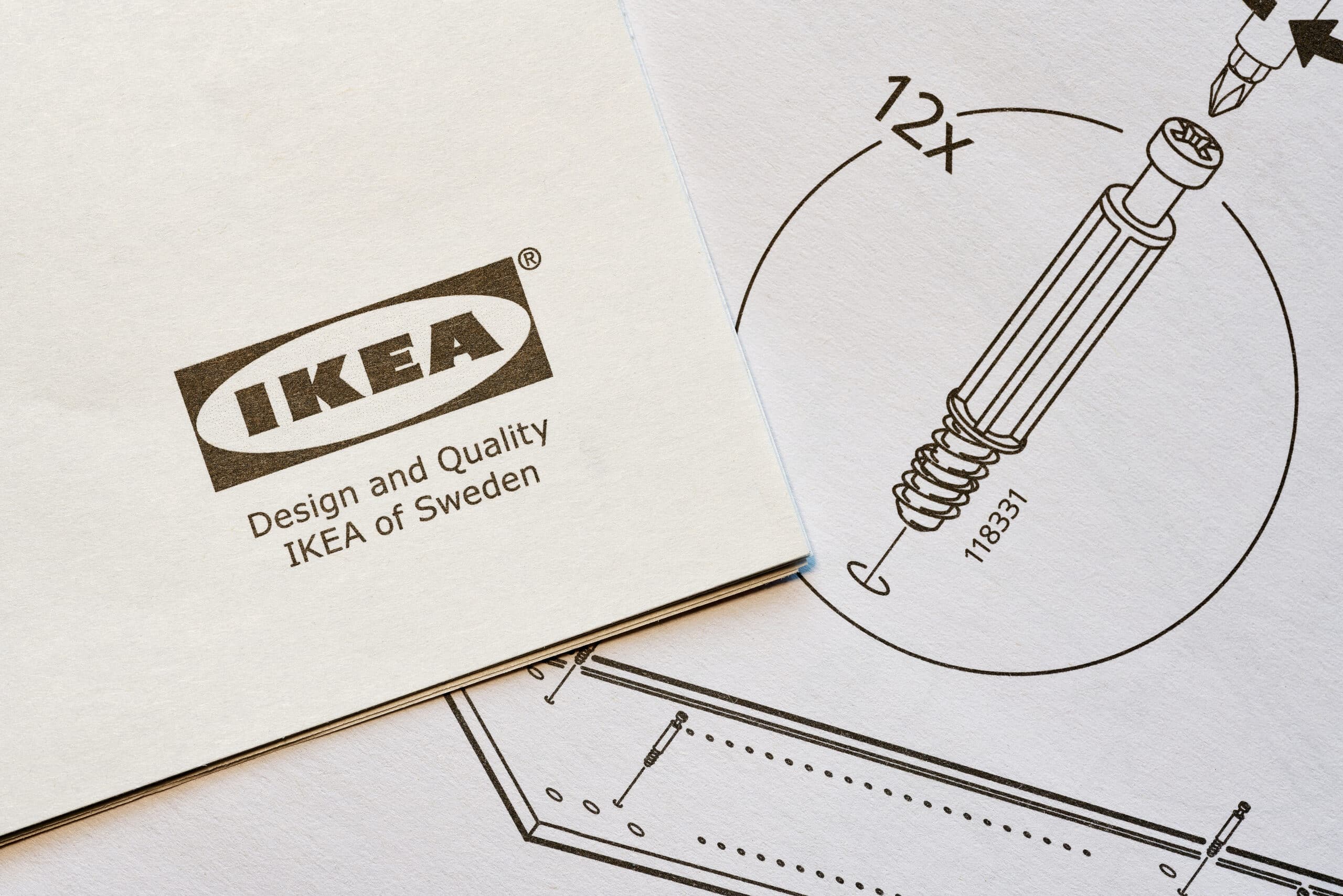
IKEA instructions. Credit: Heiko, stock.adobe.com
Ingvar Kamprad, IKEA’s founder, confronted a recurring structural cost: bulky furniture often simply costs too much to manufacture, ship, store and deliver. As IKEA began selling furniture, these logistics costs swallowed margins.
One pivotal (and in hindsight, incredibly simple) insight was made: if customers do part of the work (transport + assembly), costs and complexity fall. IKEA’s flat‑pack model essentially pushed the last leg of the value chain to the user.
Flat‑Packs in Practice: Scaling with Efficiency
Though IKEA didn’t invent flat packaging, it did come close to perfecting it. As the IKEA Museum notes:
This meant a single truck could carry many more units, with fewer shipping damages, and a lower storage footprint. As one analysis explains: “Ikea could ship ten times as many flat‑pack desks, tables, or bookcases as competitors, for almost the same amount of gas.” In-store, even IKEA’s infamous one-way system is a nod towards ruthless efficiency.
Democratic Design: Balancing 5 Dimensions
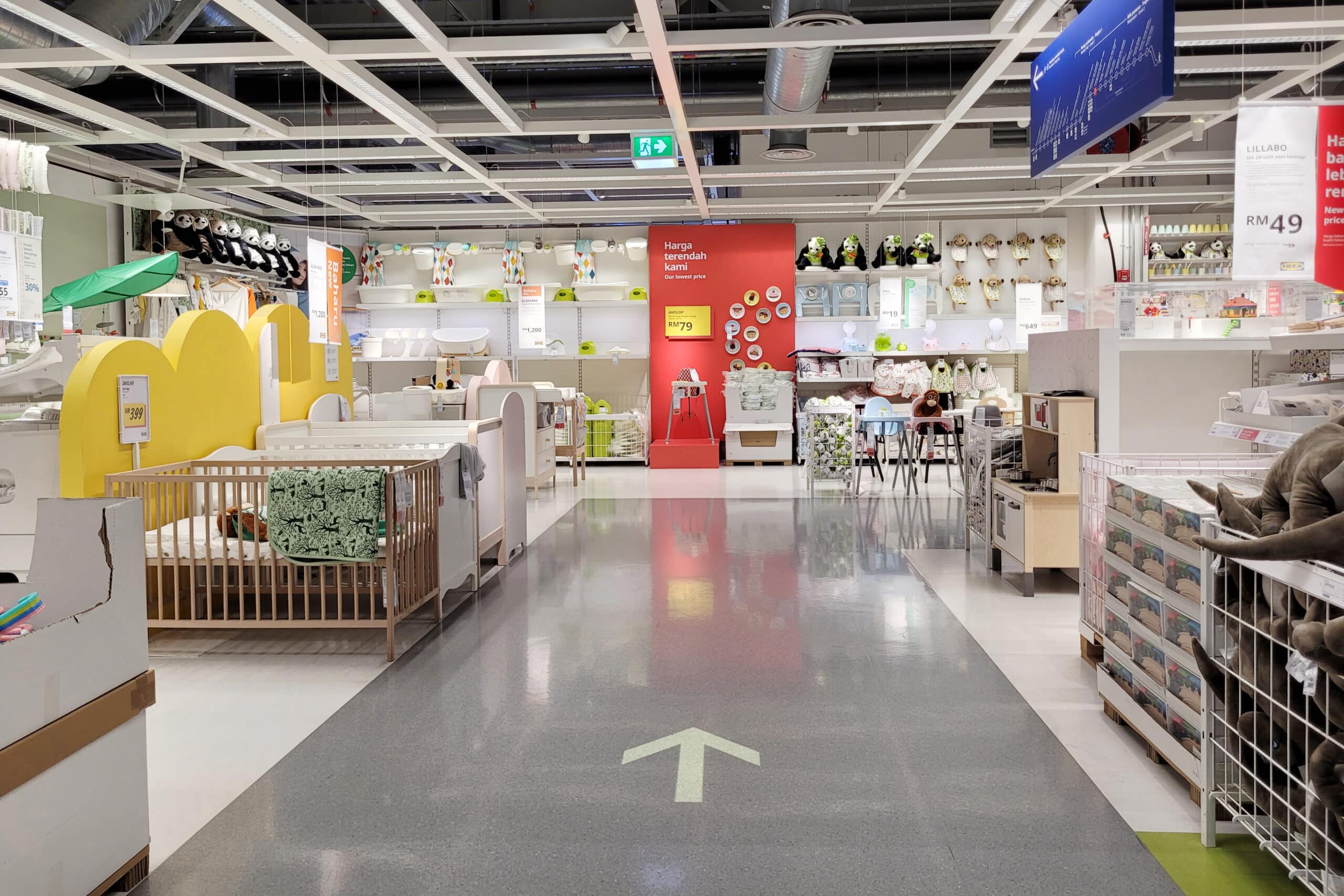
IKEA and its famous one-way system. Source: ltyuan, stock.adobe.com
IKEA calls its approach Democratic Design. Every product is shaped around five dimensions: form, function, quality, sustainability, and price.
IKEA also underscores this on its site:
This rigorous balancing act means that cost constraints are not just barriers; they become creative constraints.
IKEA flat-pack box. Credit: ArieStudio, stock.adobe.com
Design for Manufacturing & Supply Chain
IKEA designs not only for use, but for production, packaging, shipping, and assembly. Its product development teams foresee exactly how parts will stack in a carton, how pieces will travel, even how the user will click them together.
Inside an IKEA factory in Slovakia, designers build new credenzas and components thinking across all these vectors:
This cross‑system thinking turns packaging constraints and logistics into design levers.
Sustainability, Circularity & Future Challenges
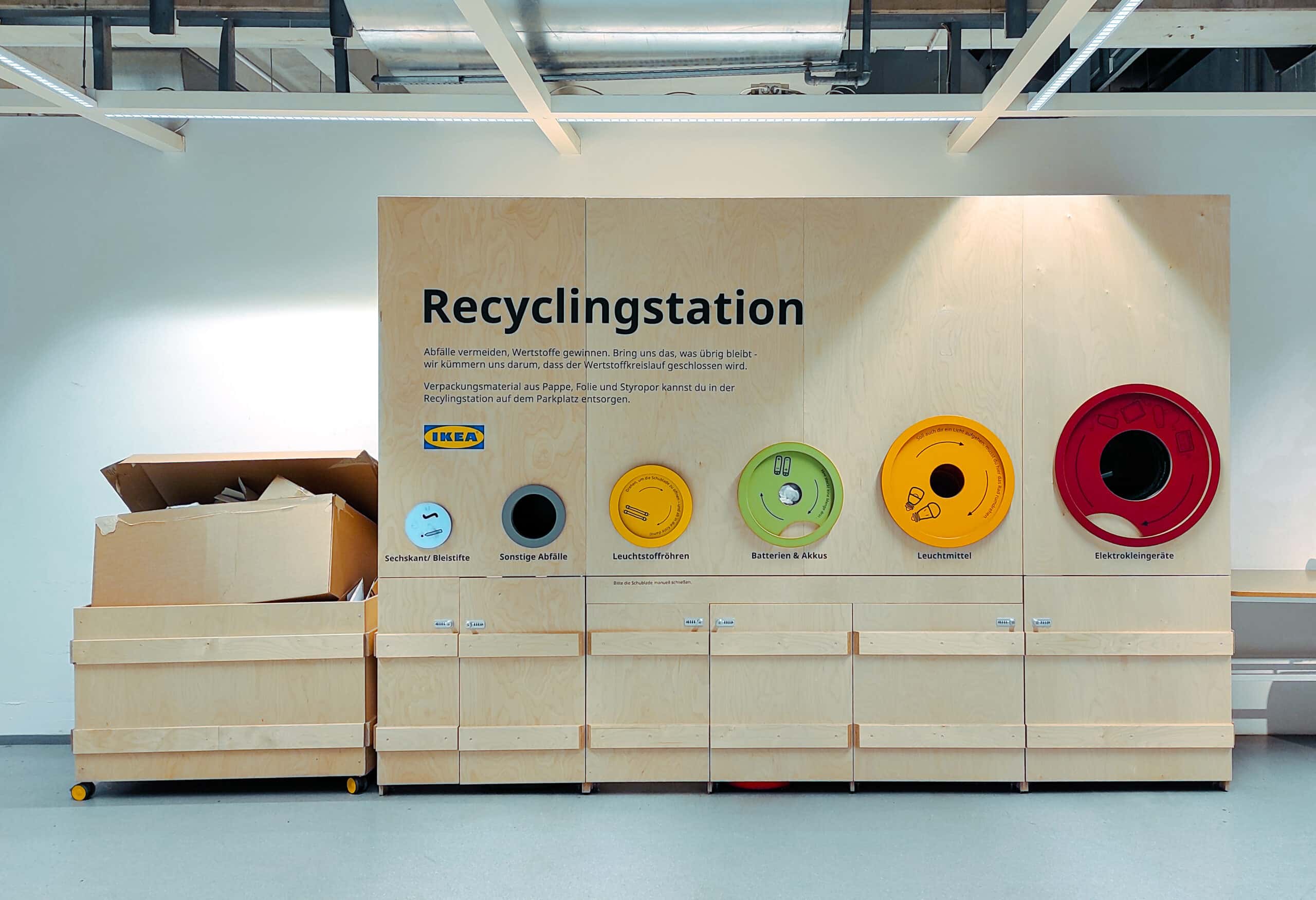
IKEA recycling station, Germany. Credit: katatonia, stock.adobe.com
IKEA today is pushing toward a more circular future: spares, buyback, modular redesigns, and material innovation.
Yet challenges remain: IKEA concedes that glues, bonded panels, and disassembly constraints limit full recycling. Still, the ambition is clear: to decouple growth from resource consumption.
Risk & Complexity: Low Price, High Volume
Operating at low margins, massive scale, and tight cost discipline means IKEA faces constant pressure:
- Supply chain disruptions
- Volatile materials markets
- Consumer demand swings
- Tensions between sustainability and affordability
Yet IKEA’s model mitigates many risks by designing for modularity, multi-source supply, and standardization across markets.
Cultural & Brand Resonance
Beyond cost and design, IKEA has become a cultural icon. The phrase “IKEA effect” describes the increased attachment people feel when they assemble their own furniture. The brand’s style has become shorthand for accessible modern living.
That cultural bond extends to global homes—where IKEA staples wind up passed between apartments, generations, and DIY hacks.
Lessons for Product & Business Leaders
- Turn constraints into design fuel. IKEA’s decision to offload assembly is a constraint that unlocked scale.
- Balance across dimensions. Don’t prioritize form at the cost of function, or price.
- Design across the chain. You must design for shipping, storage, assembly (even disposal).
- Embed evolution in the model. Circularity, modularity, and sustainability must be woven in.
- Build emotional stakes. Encourage participation and connection along with the consumption.
IKEA trolley. Credit: filmbildfabrik, stock.adobe.com
Conclusion: The IKEA Playbook for Lasting Scale
IKEA didn’t simply build a furniture business; it rewrote the rules of product, logistics, brand, and consumer expectations. Through flat‑packs, democratic design, and systemic integration, it elevated what a mass-product company could become.
In the world of product awards and design leadership, IKEA offers a vivid blueprint: brilliance emerges not from compromise, but from constraint-aware innovation. If you can make affordability beautiful, efficiency invisible, and scale sustainable, you’re playing in IKEA’s arena.