Design certainty, brand trust, and manufacturing mastery.
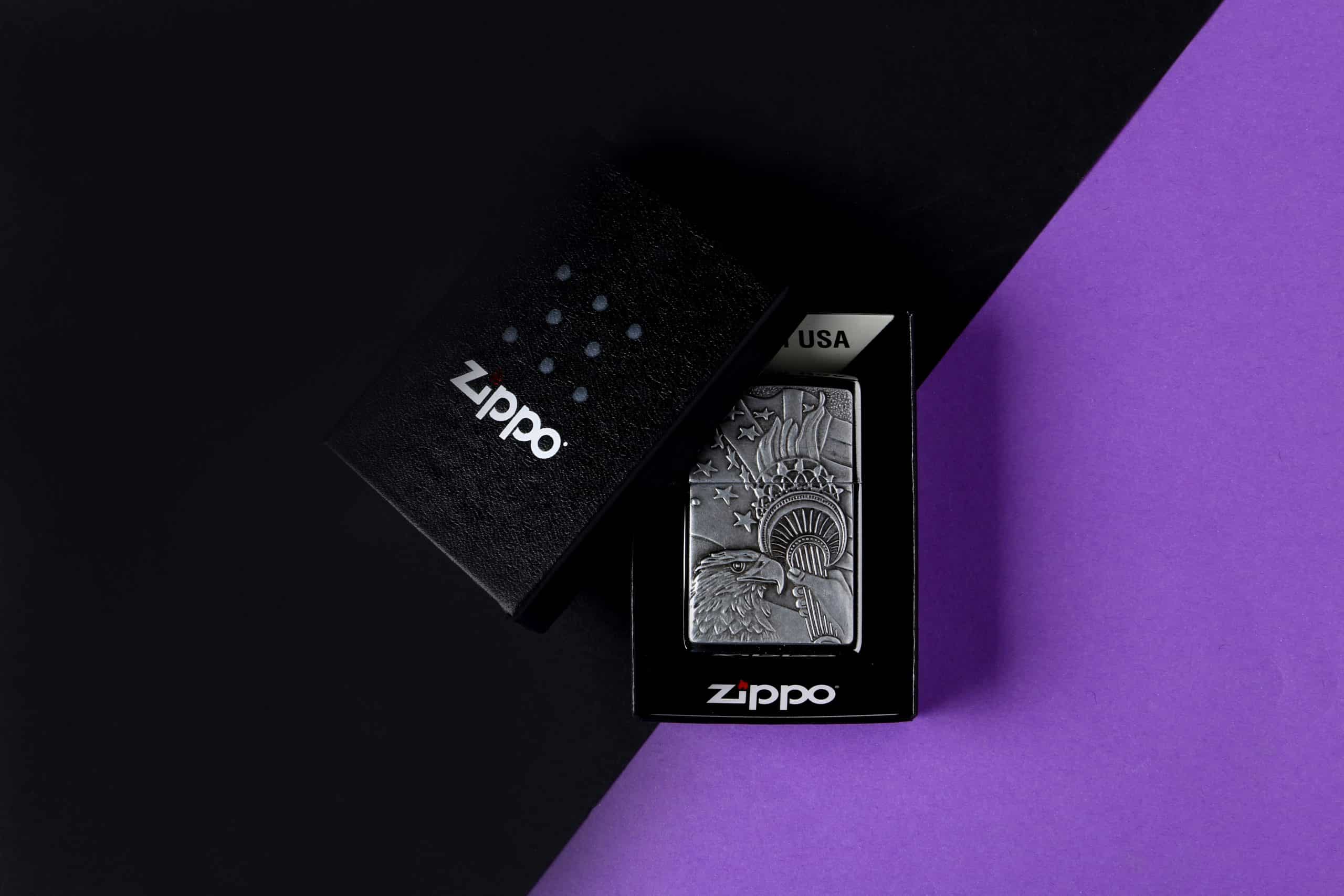
When product leaders, CEOs (indeed, anyone with an eye for exceptional innovation) thinks “iconic,” few products achieve the same instant recognition as the Zippo lighter.
Alongside the nostalgia, it’s a blueprint in design certainty, brand trust, and manufacturing mastery. As we’ll see, it’s a blueprint the company has firmly (and wisely!) protected.
At The DaVinci Awards®, we recognize businesses and products that aim to transcend function and become cultural mainstays. But how did a humble metal lighter became a standalone in its field, revered by users (and why does that matter for your own product ambitions?)
Zippo windproof innovation history
Zippo logo on flag. Source: Alexey Novikov, stock.adobe.com
In the early 1930s, founder George G. Blaisdell observed a cumbersome two-handed lighter in use and saw an opportunity to engineer something windproof and reliable. By 1933, the first Zippo lighter, priced at $1.95, embodied user-first thinking:
Blaisdell even named it after the zipper, inspired by its “modern” sound (Wikipedia). His early patent (filed May 17, 1934; granted March 3, 1936) secured the design of what would become a timeless form (Zippo). This was the foundation of such design clarity, mechanical excellence, and the ongoing relationship with the user.
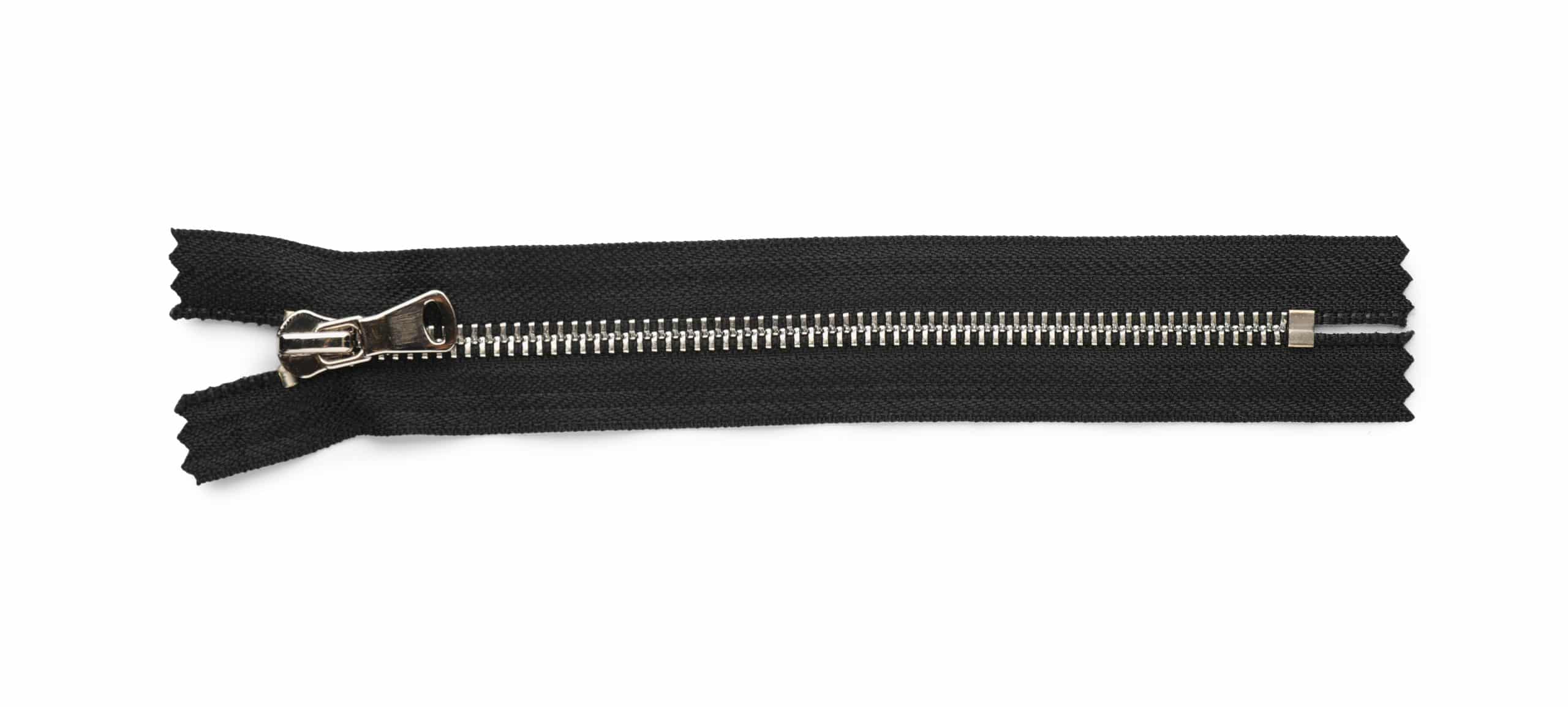
Guaranteeing Excellence for Life
The Zippo lifetime guarantee legacy is the cornerstone of product trust and is now an enduring differentiator in a world of increasingly disposable design.
What sets Zippo apart is not just its form, but its unwavering lifetime guarantee: “It works or we fix it free™” (Zippo). Every Zippo sent to Bradford’s repair clinic, even a 50-year-old model, is serviced free of charge. Reddit users echo the sentiment:
This guarantee is a remarkably robust product differentiator. From the get-go, it cements customer service as being at the heart of the Zippo brand. This is a marketing manifesto of “choose once, cherish forever,” which is a far cry from the exploding market of more ‘disposable’ lifestyle products. While these all offer to enhance our experience, the timeframe in which they do so is often much shorter – and seldom multi-generational.
The Product as a Declaration
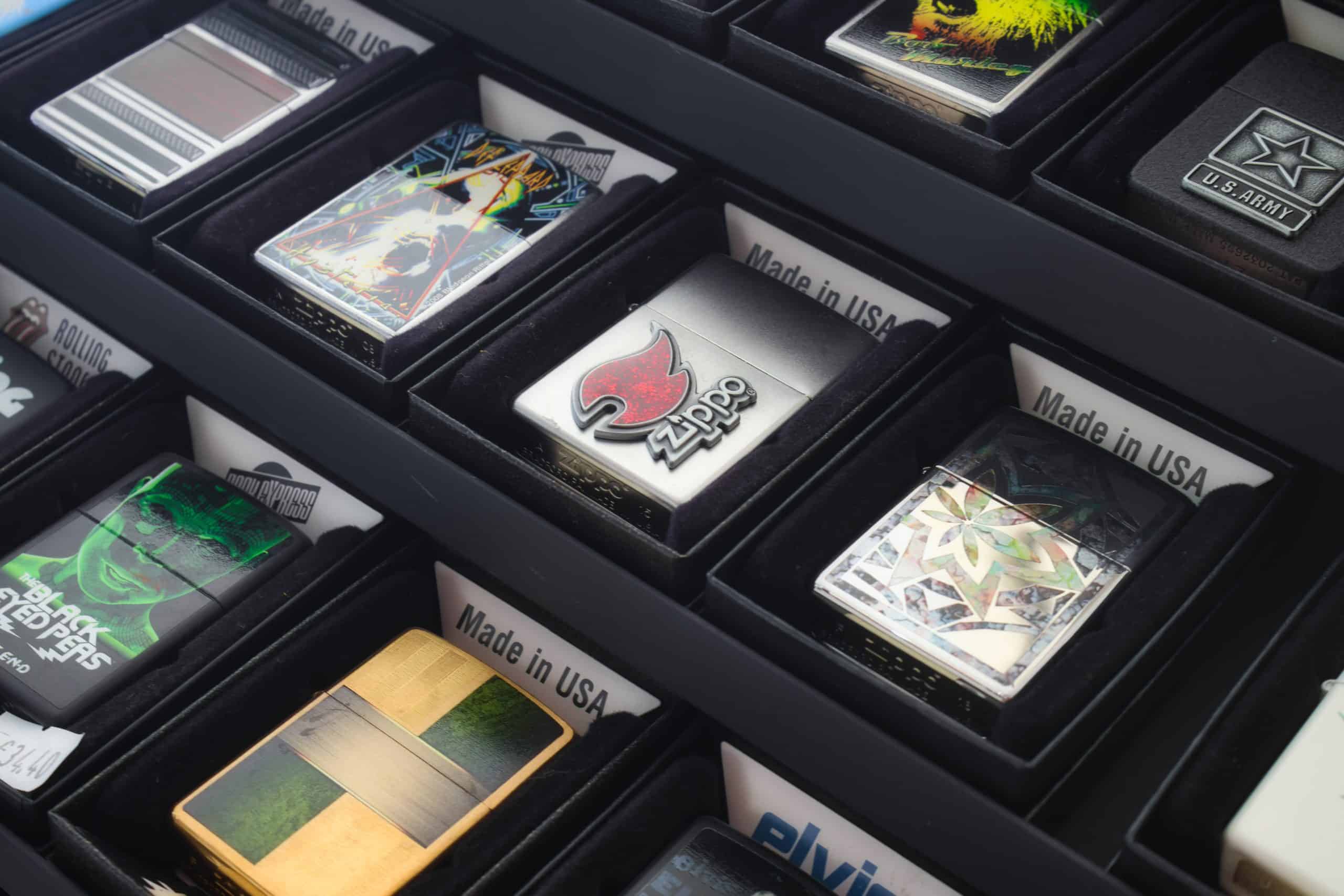
Array of Zippo lighters for sale. Source: TenWit, stock.adobe.com
Zippo’s design has been remarkably consistent for almost a century. As the U.S. Chamber of Commerce notes, their windproof lighter has remained “virtually unchanged”—a testament to design conviction (Core).
Zippo’s brand authority is a case study in success: the lighter’s design is not just consistent but also confidently unchanging, projecting brand leadership through form and function. The product itself forms part of the brand; immutably projecting through the decades.
Maintaining this consistency creates brand authority through reliability. This brand discipline could be mistaken for stagnation, but Blaisdell’s philosophy still rings true: integrity first, evolution second. Every lighter still carries the same spring-loaded cam, chimney design, and signature flip, each part replaceable and serviceable.
Zippo = American manufacturing excellence
Zippo stands as an example of ‘Manufacturing as Messaging.’ Indeed, the sentiment of ‘Made in America’ has perhaps never been a more powerful personal (and even political) statement. The company’s decision to retain local manufacturing may have some logistical benefits, but most importantly it remains an integral part of its brand value.
Zippo’s Bradford, Pennsylvania factory remains the birthplace of every windproof lighter (American Manufacturing). This romantic approach to manufacturing combines operational control with strategic impact:
Design Evolution Without Dilution
The product line is of course far from static. It’s a successful strategy we’ve seen elsewhere, from automobiles to cellphone cases. Zippo’s collectible design evolution demonstrates how carefully curated updates can add layers of desirability and narrative depth, without sacrificing that all-important product DNA.
Zippo remains relevant through incremental design rather than out-and-out reinvention. Highlights include:
The product evolves around its core identity. Collectors prize models tied to cultural moments, like the moon-landing anniversary or limited-edition concert lighters, evidenced by $30,000+ resale values. New lighters currently retail from $17.95… to $25,000 for an 18-karat solid gold model.
Cultural Resonance: More Than Just Fire!
Zippo is embedded in our cultural consciousness. Consider:
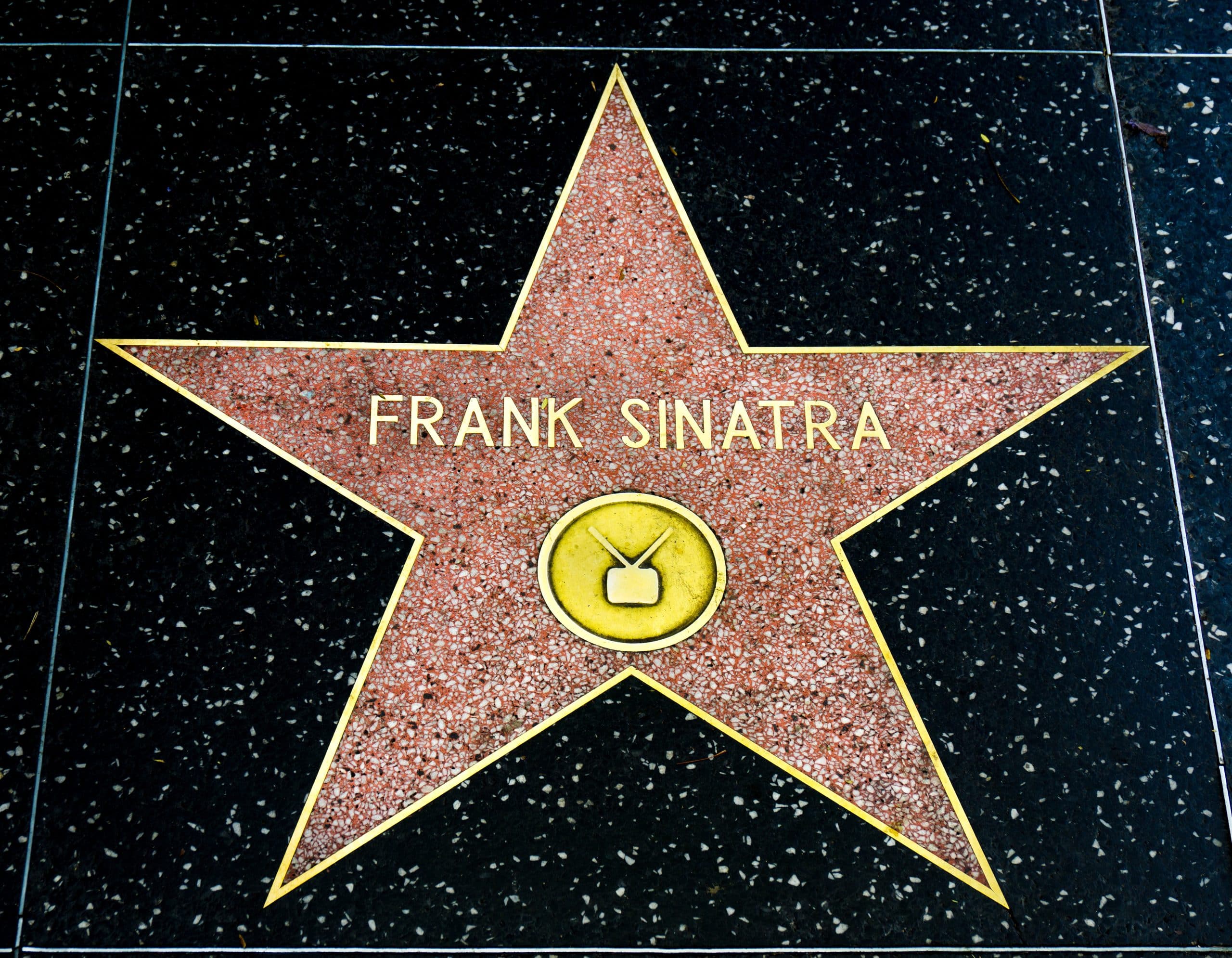
Frank Sinatra's star on the Hall of Fame. Source: wolterke, stock.adobe.com
Today, even its “click” is trademarked — a signal of Zippo’s status as cultural IP (Wikipedia). This is heavy-hitting stuff: the kind of brand product managers dream about. This impact is only magnified by the legions of brands keen to align themselves with the iconic lighter. Even a Zippo modified with a personal engraving says something about one’s personal ‘brand.’
Intellectual Property as Armor
In a market flooded with counterfeits — up to 12 million fakes annually — Zippo defends its IP aggressively (Erik Pelton). It holds trademarks on its shape and legendary “click,” and cooperates with U.S. Customs to prevent knockoffs.
Ironically, their “guarantee-to-service” model could be seen to give counterfeiters an edge, since they can offload repair costs to Zippo – or at least build the promise of repair into their cut-price offerings. IP defense becomes both a legal fortress and a financial strategy.
Zippo’s Sustainability by Design
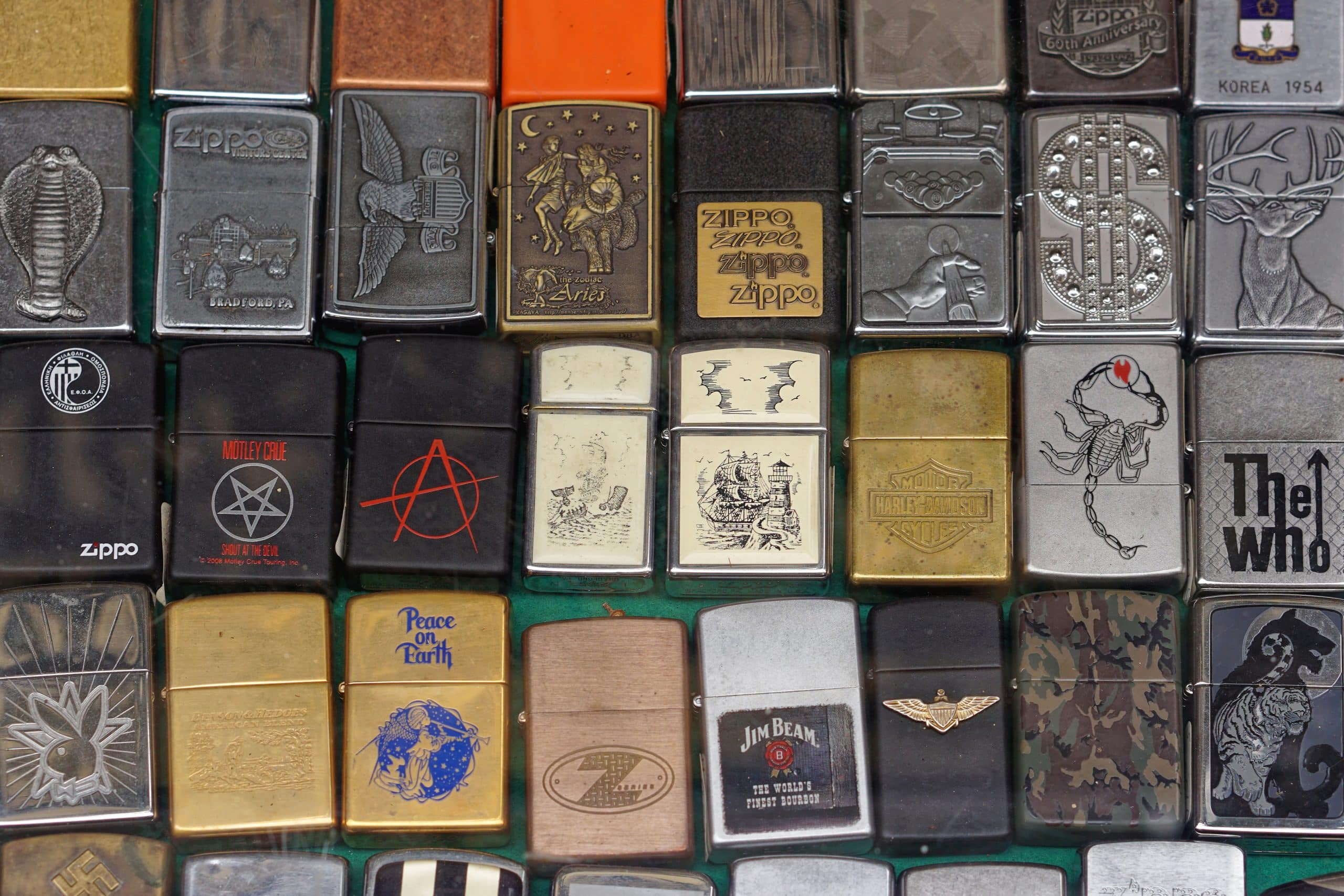
Zippo lighters collection. Source: tatabrada, stock.adobe.com
While not marketed as eco-friendly, Zippo’s design achieves endurance-based sustainability:
This 90-year concept of circular design speaks volumes to eco-conscious consumers.
Takeaways for Product Leaders & CEOs
- Guarantee as Product – Zippo’s promise is a product feature.
- Design Steadiness – True evolution honors a product’s DNA.
- Manufacturing Messaging – Where you make shapes what you stand for.
- IP as Strategic Shield – Protecting form and sound defends brand equity.
- Cultural Embedding – Be present culturally as well as functionally.
- Sustainability – Design that endures is naturally more sustainable.
Conclusion: The Flame That Defines Greatness!
The essence of Zippo is simple yet potent: design integrity, relentless guarantee, manufacturing mastery, and cultural resonance. These elements fuse to form a product that accrues legacy rather than simply ages. It’s a stand-out prototype for any creator aiming to build a product that not only works, but matters.
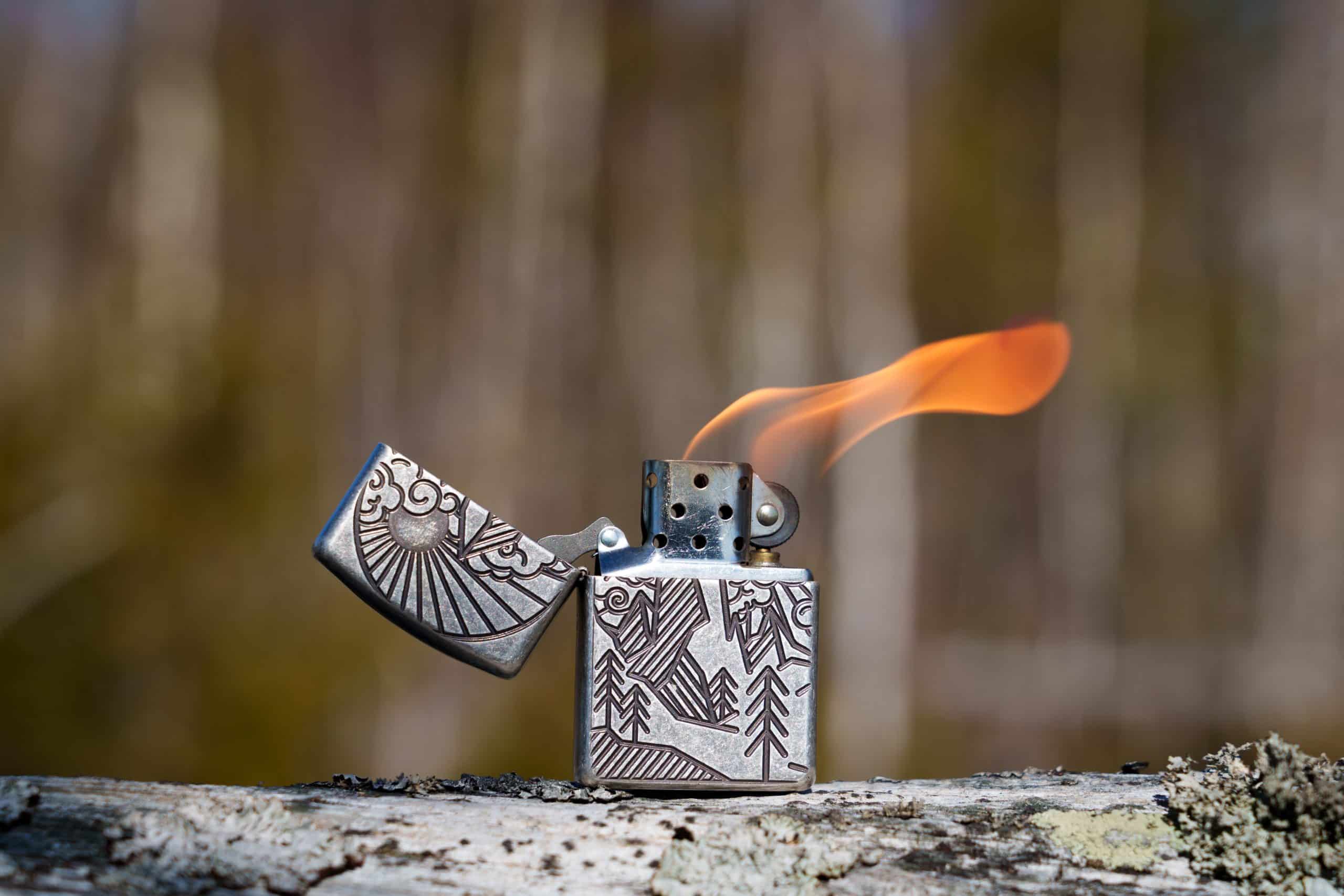
Flaming vintage Zippo. Source: Mikhail, stock.adobe.com